
Nickel has long been widely used in batteries, most commonly in nickel-cadmium (NiCd) and in the longer-lasting nickel metal hydride (NiMH) rechargeable batteries, which gained prominence in the 1980s.
The adoption of NiMH batteries in power tools and early digital cameras revealed the potential to develop a gamut of portable devices using these batteries.
The mid-1990s saw the first significant use of NiMH batteries in vehicles when Toyota launched the Prius. Around the same time, the first commercial applications for lithium-ion (Li-ion) batteries emerged, first in camcorders and eventually finding their way into smartphones, laptops and other portable devices.
Higher energy density at lower cost
The major advantage of using nickel in batteries is that it helps deliver higher energy density and greater storage capacity at a lower cost.
Higher energy density means that the batteries can store more energy, leading to longer driving ranges for electric vehicles (EVs) without increasing the size or weight of the battery.
This is a critical factor in making EVs more practical and appealing to consumers, as range anxiety has been a significant barrier to wider adoption.
Additionally, nickel-based batteries offer better capacity retention, which means they can maintain their charge capacity over a larger number of charge and discharge cycles.
This translates to longer-lasting batteries, reducing the need for frequent replacements and making EVs more sustainable and cost-effective in the long term.
Does the world need more nickel?
Historically, close to 70% of refined nickel went into the manufacturing of stainless steel. In recent years, demand for nickel has been shifting to its use in EV batteries.
More than 10 million EVs were sold worldwide in 2022. Conservative estimates forecast total sales of 35 million electric vehicles by 2030.
With the 40 to 50 kilograms of nickel per vehicle estimate, we would require between 1.5 million and two million tonnes of nickel annually for these EVs.
World primary nickel usage was 2.957 million tonnes in 2022, according to data from the International Nickel Study Group (INSG).
Underpinned by the massive growth in EV sales, the INSG forecasts an increase in primary nickel usage to 3.195 million tonnes in 2023 and 3.474 million tonnes in 2024.
Nickel small caps making moves
Let’s take a look at some of the ASX-listed nickel plays that made gains during the September quarter.
Queensland Pacific Metals
Queensland Pacific Metals Ltd (ASX:QPM)’s TECH Project will be a modern and sustainable battery materials refinery, processing imported, high-grade laterite ore from New Caledonia to produce nickel sulphate and cobalt sulphate, as well as other valuable co-products.
QPM has already secured offtake agreements for 100% of nickel and cobalt sales for the life of the project.
In addition to being offtake partners General Motors, LG Energy Solutions and POSCO are also investment partners with a significant shareholding in QPM.
During the quarter, QPM completed nickel sulphate pilot plant test work at SGS Canada.
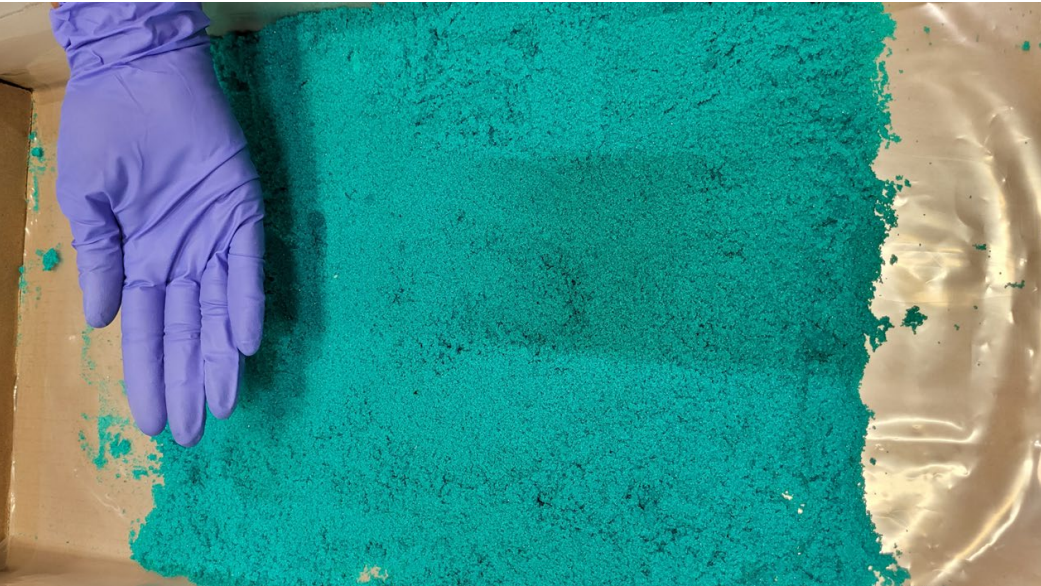
Nickel sulphate produced during pilot plant operation.
The pilot plant was successful in producing nickel sulphate which met the specifications of QPM’s offtake agreements. Furthermore, the piloting validated the commercial flowsheet being used in the TECH Project.
Leeuwin Metals
Leeuwin Metals Ltd (ASX:LM1)’s maiden 6,098-metre drill program at the William Lake Nickel Sulphide Project in Manitoba, Canada, was completed during the quarter.
The drilling focused on extending known high-grade nickel mineralisation at the W56 and W21 prospects.
Results to date support the interpreted continuity of mineralisation and provide further geological information to enable the targeting of higher-grade zones.
Leeuwin managing director Christopher Piggott said: “Since listing in March 2023, we have been executing exploration within the portfolio and with a focus on ensuring money is being spent in the ground.
“The results of this work have been very encouraging. With significant nickel assays received at the William Lake Project, demonstrating the high-grade and potential scale of the project.”
Galileo Mining
Galileo Mining Ltd (ASX:GAL, OTC:GLMGF) continues to advance its Fraser Range nickel project and Norseman palladium-platinum-gold-copper-nickel-rhodium project in Western Australia.
During the quarter, Galileo undertook a ~3,200-metre drill program at Norseman’s Jimberlana and Mission Sill prospects.
Galileo managing director Brad Underwood said: “I am pleased to report on yet another fruitful quarter of exploration drilling at our Norseman project across both the Callisto discovery and priority targets at Jimberlana and Mission Sill.
“Assays received from Jimberlana identified a significant sulphide zone on the margin of an ultramafic rock unit which is open down dip and along strike in all directions.
“This is an excellent geological location for the potential discovery of economic mineralisation and illustrates the fundamental potential of our Norseman prospects, not only for nickel-palladium discoveries such as Callisto but for high-value nickel sulphide deposits.”
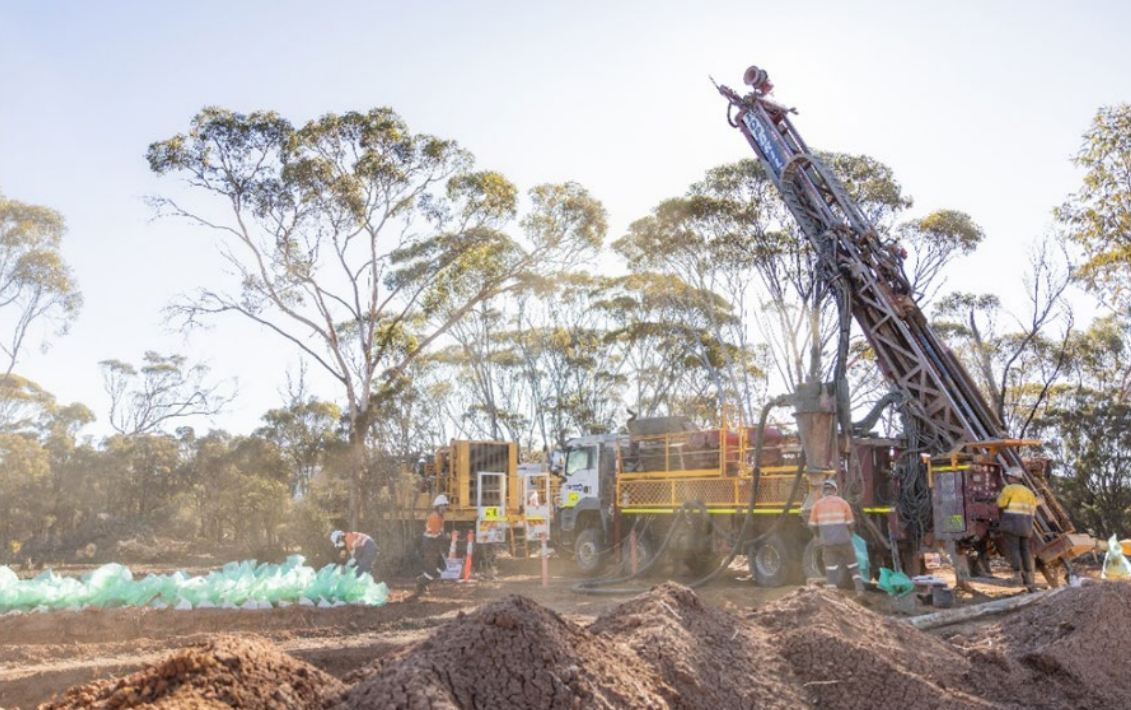
Reverse circulation drilling at Galileo’s Jimberlana and Mission Sill prospects.
Additionally, regional electromagnetic surveying was completed at Galileo’s northern Fraser Range project area with the aim of defining new undercover nickel targets for drill testing.
Galileo is fully funded to implement all planned drilling programs with ~$12 million in cash as at September 30, 2023.
Future Metals
Following the quarter's end, Future Metals NL (ASX:FME, AIM:FME) revealed a significant milestone with an upgrade to the mineral resource estimate (MRE) for its 100% owned Panton PGM-Nickel-Chromium Project.
The total MRE at Panton is now 92.9 million tonnes at 1.5 g/t PGM3E (platinum, palladium and gold), 0.20% nickel, 3.1% chromium (2.0 g/t PdEq - palladium equivalent) for contained metal of 4.5 million ounces PGM3E, 185,000 tonnes nickel, 2.8 million tonnes chromium, (6.05 million ounces PdEq).
Read: Future Metals established Panton as highest-grade PGM Project in Australia with MRE update
This upgraded MRE further establishes the Panton project as the highest-grade PGM project in Australia and one of the highest-grade undeveloped PGM projects globally.
The MRE included an estimate for the Panton deposit’s chromite content for the first time, positioning it as one of the only chromite projects in Australia, and one of the few in a top-tier jurisdiction.
Corazon Mining
During the quarter, Corazon Mining Ltd (ASX:CZN, OTC:CRZNF)’s drilling intersected nickel-copper-cobalt sulphide at the Fraser Lake Complex (FLC) within the Lynn Lake Project in Manitoba, Canada.

Corazon’s two-pronged strategy at Lynn Lake is focused on development and exploration.
Mining Centre studies are seeking cost and performance efficiencies in mining and processing practices, progressing the possible development of a significant, low-cost mining operation.
Exploration in the mine area is looking to expand the near-surface JORC resource base in search of start-up feed to complement existing resources at depth.
Corazon continued its metallurgical test work program during the quarter focused on utilising innovative processing technologies to upgrade the mineralisation typical of the Lynn Lake Mining Centre.
Based on the positive outcomes of this test work, both Ore Sorting and Coarse Flotation methods will be considered for use at Lynn Lake and for the scoping study work currently underway.
NickelX
NickelX Ltd (ASX:NKL) progressed drill targeting, land owner and regulatory approvals process to undertake a ~1,400-metre RC drilling program at the Dalwallinu Nickel-Copper-PGE Project in the emerging Western Yilgarn Nickel Province, WA, where the company is targeting Julimar style nickel-copper-PGE mineralisation.
Post the end of the quarter, NickelX received notice from the Department of Mines, Industry Regulation and Safety (DMIRS) of the proposed Program of Works (POW) for the drilling program.
The company is planning to start drilling in early December.
NickelX also struck an exclusive option agreement during the quarter for the acquisition of nickel and hard rock lithium exploration projects in central Europe.
Following the signing, NickelX progressed desktop and field work due diligence of the Ransko Nickel-Copper-Cobalt Project and the Otov Hard Rock Lithium project in the Czech Republic.
Poseidon Nickel
Poseidon Nickel Ltd (ASX:POS, OTC:PSDNF) is advancing the Windarra, Black Swan and Lake Johnston nickel projects, all within a radius of 300 kilometres from Kalgoorlie in the Goldfields region of Western Australia.
First-stage confirmatory metallurgical test work results during the quarter for the Black Swan 1.1Mtpa Restart Project indicate that the non-sulphide nickel content of the disseminated serpentinite ore is consistent with Poseidon’s bankable feasibility study.

CEO Craig Jones said: “We continue to progress key workstreams for Black Swan, including grid power studies with Western Power, additional metallurgical test work to confirm recoveries and concentrate quality used in the November 2022 Bankable Feasibility Study, assessing accommodation options in Kalgoorlie for the proposed FIFO workforce and continuing to engage with the two shortlisted offtake and debt financing providers.
“As we move forward, we will continue to assess the restart of Black Swan based on the outlook for global commodity and equity markets and the nickel price environment.
“We remain committed to restarting Black Swan, however, until the nickel market outlook improves, the focus will be on targeted exploration and proximal business development opportunities to drive value for shareholders.”