
Ofgem will likely announce a reduction in its price cap for October onwards on Friday, as households brace for yet another winter of higher-than-usual energy bills.
Though Cornwall Insight analysts anticipate the next cap will fall from £2,074 currently to £1,926 on October 1, others have warned that bills could actually rise for some year-on-year.
Given government support last year, including subsidies on the unit prices of households’ energy and £400 bill support payments, think tank the Resolution Foundation found that those using less than the typical amount of energy could face higher bills this winter.
“In fact, any family with an energy consumption less than four-fifths of the average will see higher bills this winter than last,” the group said.
“[This is] a situation that applies to around one-in-three of households in England and close to half of those in the lowest income decile.”
???? NEW RF analysis ????
A fall in the @ofgem price cap, should spell good news for household bills.
But we've found that, despite the cap coming down, more than 1 in 3 households will pay higher bills this winter than last ⤵️ https://t.co/3dhUfIOpcw pic.twitter.com/4x2hWVlNcq
— Resolution Foundation (@resfoundation) August 24, 2023
Ofgem’s cap determines how much suppliers can charge per unit of energy but is displayed as how much the typical British household would pay on such prices annually.
At £1,926, the new price cap would indeed mark a drastic fall from last year’s cap of £3,549, which was in place between October and January of this year, though daily standing charges within this are tipped to be higher.
“Whether a household faces a lower bill this winter depends on whether the lower per-unit prices provide savings that outweigh the higher standing charges and removal of […] support,” the Resolution Foundation added.
“Households consuming large amounts of energy – and therefore gaining the biggest benefits from lower per-unit prices – are more likely to see lower bills this winter than last winter.”
What is the price cap?
Having been introduced in 2019, the price cap is meant to provide a ceiling on how much energy suppliers can charge households for power.
This is done by placing a cap on the amount that can be charged per unit of gas and electricity, which currently sits at 8p and 30p per kilowatt-hour respectively.
How much the average typically consuming household would then pay on an annual basis is the figure displayed in Ofgem’s price cap.
For the quarter from July to October, this was set at £2,074. However, given the cap actually determines unit prices, households could end up paying more or less than this over a year.
A host of factors contribute to the final figure, including, of course, the wholesale price of energy, but also the likes of network and operating costs.
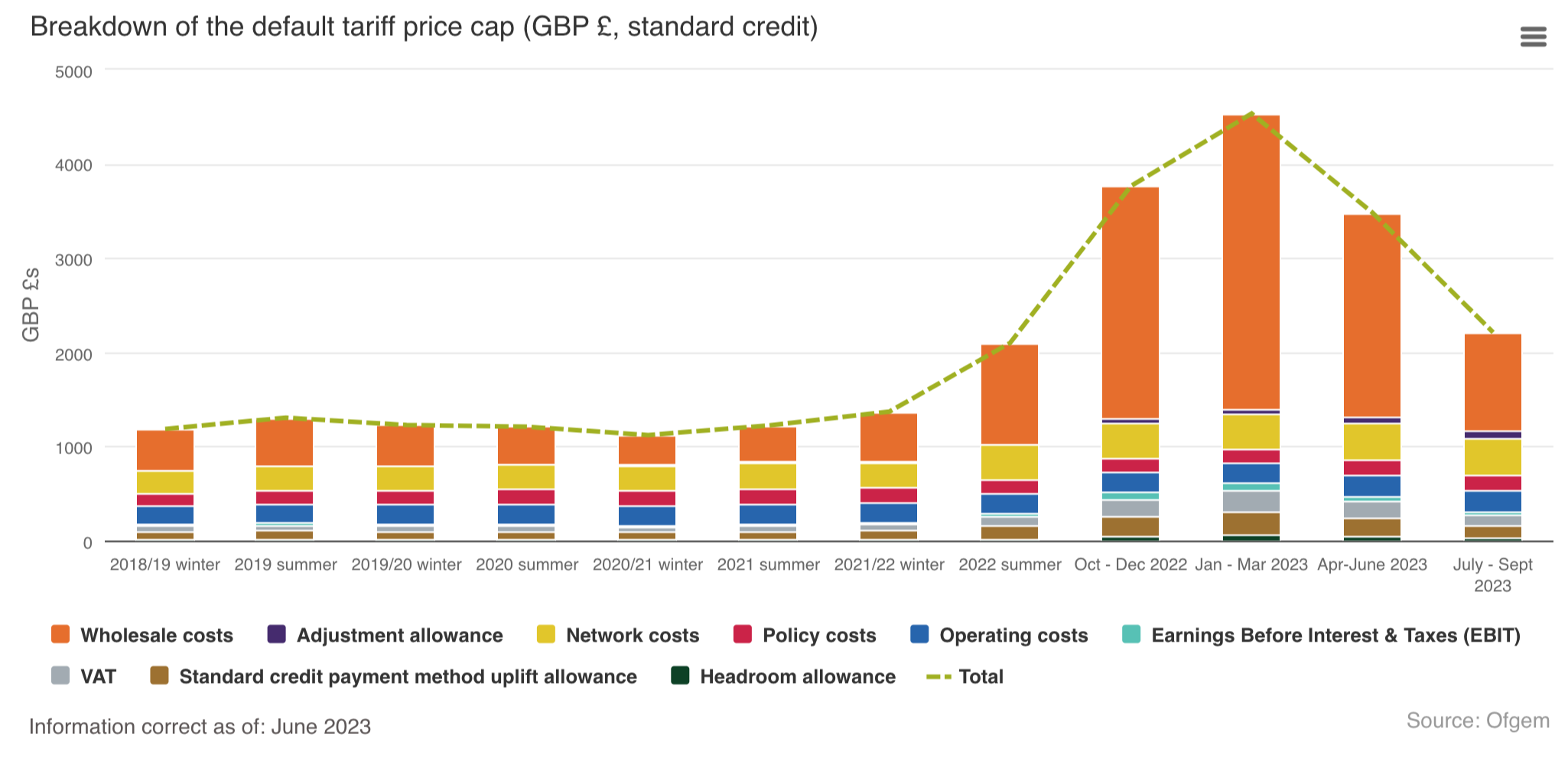
Thanks to allowances in Ofgem’s caps so far this year, suppliers such as British Gas and Eon have been able to hike bills to recoup losses faced early on during the energy crisis.
This ultimately saw British Gas pen a near-900% rise in operating profit during the first six months of the year – sparking heated scrutiny of Ofgem given many households are still struggling with high prices.
On the plus side, when Ofgem introduced its current cap in July, energy prices fell for the first time since February 2020.
Though the government’s energy price guarantee had limited average bills to £2,500 for ten months from October, the drop reflected lower wholesale prices, which dipped below pre-Ukraine war levels last December.
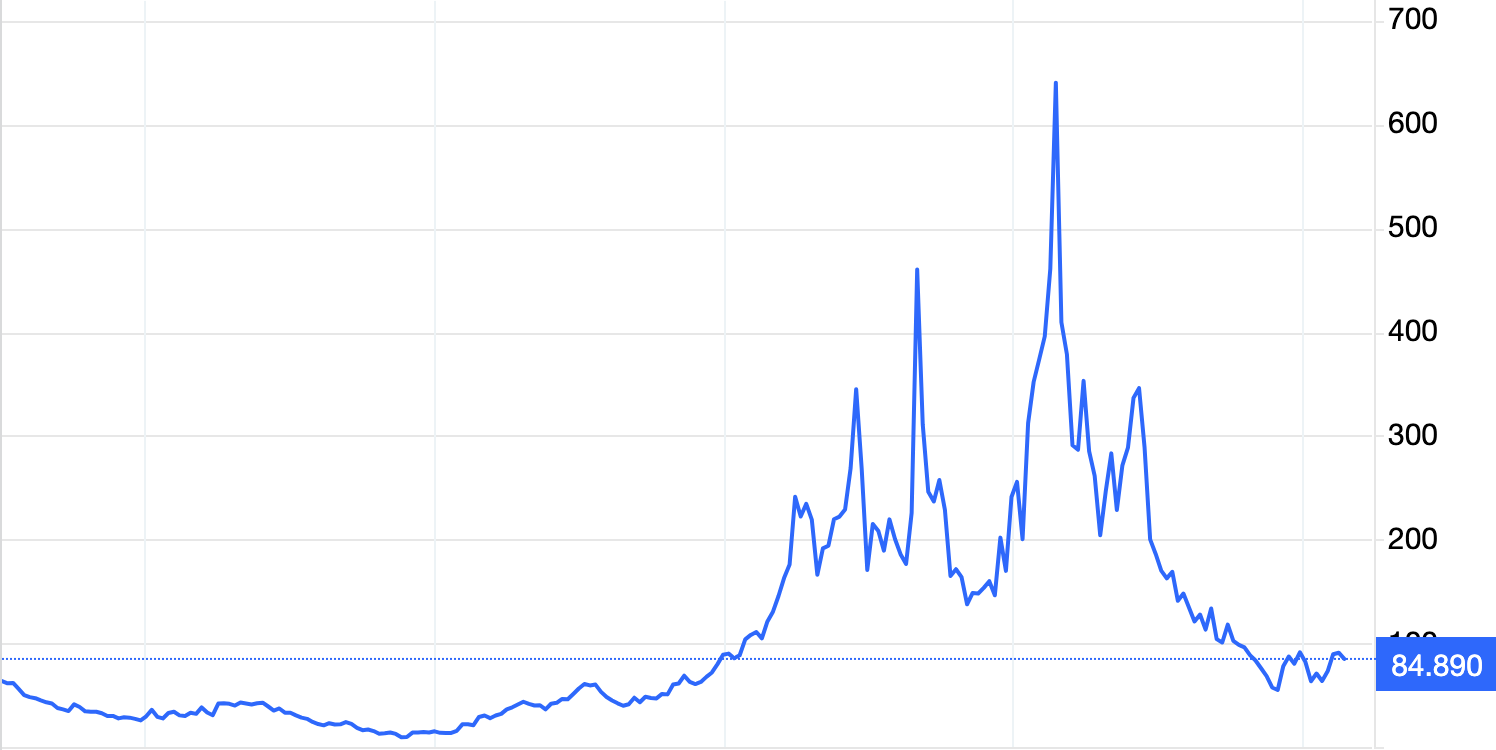
UK Natural Gas (GBp/thm) late 2018 - current - Trading Economics
Owing to higher wholesale prices, the price cap has effectively become a means for suppliers to determine how much to charge, rather than a maximum limit on prices.
“Unfortunately, the price cap alongside other Ofgem rules currently in place, have failed to bring about meaningful competition,” Uwitch director Richard Neudegg explained.
“Suppliers have no incentive to offer better prices to anyone […] and when suppliers have no incentive to attract new customers, consumers lose out.”
A lower cap, as anticipated by analysts, would mark the second fall this year for the majority, following sustained increases in the price cap from early 2020 to last April.
Historical price cap figures:
- January 2019 - £1,137
- August 2019 - £1,179
- February 2020 - £1,042
- February 2021 - £1,138
- August 2021 - £1,277
- April 2022 - £1,971
- October 2022 - £3,549 (£2,500 government price guarantee introduced)
- January 2023 - £4,279
- April 2023 - £3,280
- July 2023 - £2,074 (government price cap raised to £3,000)
- October 2023 - ?
Regardless of the murmurings from researchers, energy companies,and even regulators, on whether the cap’s mechanics should change, the system in place looks set to stay for now with this Friday set to grace us with how much we will pay for energy this winter.