
- FTSE 100 eases, down 45 points at 7,345
- Inflation falls to 6.8% in July, core inflation unchanged at 6.9%
- Aviva, Admiral rise after well received results
4:40pm: FTSE 100 finishes on the back foot
London’s blue-chip benchmark closed Wednesday’s session down 32 points, 0.44%, lower at 7,356.
3.50pm: Rate sensitive stocks lead fallers
Heading to the close in London and the FTSE 100 is close to its worst levels of the day, down 45 points at 7,345.
Plenty of rate sensitive stocks on the fallers with banks, builders and property companies all prominent while fears of a slowdown in China continue to weigh on the mining companies.
This folows inflation figures which did nothing to persude the City that another rate hike, or two, might be on the way.
One spot of news to report. United Utilities Group PLC has been slapped with a hefty £800,000 fine in court for excessive and illicit water abstraction during a dry spell, following a probe by the Environment Agency.
The water company, which supplies the north-west of England, was fined for extracting 22 billion litres of water from Lancashire boreholes, an amount sufficient to fill 8,800 Olympic-sized pools.
The penalty, meted out at Warrington Magistrates Court, follows a probe by the Environment Agency, which uncovered that during a particularly dry spell in 2018, the company had overdrawn, causing significant dips in the Fylde Aquifer.
3:15pm: Fund managers less bearish - Bank of America survey shows
Top investors are increasingly abandoning the safe haven of cash and returning to the markets as fears start to ease that the global economy will slide into recession, according to a closely watched survey of big global fund managers.
Bank of America said its monthly poll of investors had found that the mood in the international markets was the least bearish since February last year with optimism about the health of the economy starting to increase.
More than 40% of fund managers believe the global economy is unlikely to suffer a recession in the next year, the most since June last year. As a result, fund managers are moving out of cash and into riskier equities.
Cash holdings fell from 5.3% to a 21-month low of 4.8%, while allocations to shares increased by 13 percentage points compared with last month, in the biggest monthly increase recorded since November.
2:42pm: Mixed start across the pond
US markets were mixed on Wednesday looking for inspiration to take positions ahead of the FOMC minutes later in the session.
Shortly after the opening bell, the Dow Jones Industrial Average was up 36.90 points, 0.1%, at 34,983.29, the S&P 500 was flat at 4,436.35 and the Nasdaq Composite was down 55.14, 0.4%, at 13,575.90.
Ipek Ozkardeskaya at Swissquote Bank thinks the FOMC minutes "will likely show that the Fed officials remain cautious despite the latest fall in inflation numbers, for the same reasons: rising energy and food prices that are sometimes driven by geopolitical events and that the Fed could only watch and adopt."
"The Fed is expected to hold fire on its rates in the September meeting, but nothing is less guaranteed than the end of the tightening cycle before the year end," she added.
In company news, shares in Tower Semiconductor Ltd tumbled 10% after its $5.4 billion deal with Intel collapsed after failing to win Chinese regulatory approval in time.
Big-box retailer Target jumped 3.3% after reporting better-than-expected second quarter profit supported by improved margins.
But the Minneapolis-based retailer lowered full guidance for sales and earnings on the "anticipation of continued near-term challenges on the topline."
Economic data out today saw housing starts rise 3.9% month-over-month to 1.45 million in July, according to data from the US Census Bureau and the Department of Housing and Urban Development, above consensus estimates of 1.44 million.
Meanwhile, building permits rose 0.1% from the prior month to 1.44 million in July, in line with the 1.45 million consensus.
2:18pm: Women’s World Cup sees more females having a punt
As the Lionesses take their place in the World Cup final, Entain has revealed the exponential growth in betting on the tournament across the globe.
The top trend seen by Entain’s UK sportsbook is the number of women betting on football.
Entain’s Ladbrokes and Coral brands in the UK recorded that the first three England games saw an average 21% of bets placed by women, compared to 17% in the 2022 Women’s Euros, and 13% during the last World Cup in 2019.
Data from Entain’s partner and official sponsor of the tournament, TAB New Zealand, showed that almost 15% of bets recorded by TAB New Zealand have been placed by women compared to 9% in 2019.
Across the pond, the strength of the US women’s team has also been credited for the rising number of US fans backing women’s football.
For the US women’s team’s opening game against Vietnam, BetMGM saw three times the number of bets compared to Lionel Messi’s debut for Inter Miami CF.
Dominic Grounsell, Entain’s chief commercial officer said: “This summer, we’re witnessing the biggest Women's World Cup in history, and around the world there is a growing audience and appetite for women’s sports.”
“The facts say it all. More of our customers are finding new ways to support their favourite teams – and that’s with a bet.“
1:57pm: Putin summons officials to try and halt slide in rouble
Across to Russia and after yesterday's dramatic rise in interest rates President Vladimir Putin has summoned officials to discuss ramping up currency controls, the Financial Times is reporting, citing two people familiar with the matter.
Putin will hear out proposals from Russia’s finance ministry to require exporters to convert some of their foreign currency earnings, most of which are currently held abroad, in exchange for roubles, the people said.
The rouble, which briefly weakened beyond 100 to the dollar on Monday, is under sustained pressure from ballooning deficits caused by increased military spending, falling export revenues and a growing reliance on imports.
1:02pm: Peak interest rates in sight - Berenberg
Kallum Pickering has pointed out headline inflation is now falling as quickly as the Bank of England had projected in August and slightly faster quickly than it had projected back in May which should give policymakers increasing confidence in their medium-term forecast that inflation will fall back to the 2% target.
This contrasts with earlier in the year, when hotter-than-expected inflation data between February and May had forced policymakers to abandon the normal forecast-based approach to policy and react aggressively to higher-than-expected monthly inflation data - most notably with the surprise 50bp hike in June.
He thinks the figure "take a lot of pressure off the BoE to go much further with its tightening cycle."
"Now that policymakers emphasise that the current 5.25% bank rate is ‘restrictive’ and given the additional tightening impact ahead due to normal lagged effects of past policy steps, we continue to expect just one more hike in September to a peak of 5.5% – with the risk of a final 25bp hike in November," he added.
12:41pm: Big Short investor goes short again
Michael Burry, the hedge fund boss featured in The Big Short, is betting against the S&P 500 and Nasdaq Composite.
Burry, who famously made a fortune by predicting the collapse of the US housing market in 2008, held negative options on both the S&P 500 and Nasdaq 100 at the end of the second quarter, securities fillings show.
He has options with a notional value of $886 million against the S&P 500 and in addition he has $738.8 million in options against the Invesco QQQ Trust ETF - a fund on the Nasdaq comprising high-profile tech firms including Apple, Microsoft and Tesla.
Burry's bet on a market downturn amounts to more than 90% of his firm's portfolio, CNN reported.
12:06pm: Flat start expected on Wall Street, FOMC minutes to come
Not even a goal from the Lionesses can get the London equity market moving this Wednesday, more here.
It doesn't look as though events across the pond are going to inspire either.
US futures are little changed, after a torrid session on Tuesday, ahead of the release of minutes from the most recent Federal Open Market Committee meeting.
In pre-market trading, futures for the Dow Jones Industrial Average were 0.1% higher, while those for the S&P 500 rose 0.1%, while contracts for the Nasdaq 100 futures also rose 0.1%.
Joshua Mahoney at Scope Markets commented that “markets appear to be in a more upbeat mood today, with slight gains in Europe expected to translate into a positive open in the US.”
At their last meeting the Federal Reserve increased interest rates by 25 basis points taking borrowing costs to their highest level in 22 years.
UBS strategists expect the July FOMC meeting minutes to be replete with "data dependence," and that policy decisions going forward should be made "meeting-by-meeting," even if most participants at the time still thought another increase in the target range might be appropriate.
Elsewhere, Intel Corp and Israeli contract chipmaker Tower Semiconductor's proposed $5.4 billion deal has been mutually terminated as they were unable to get timely regulatory approvals.
Intel is to pay $353 million to Tower after the decision which sent shares in Tower Semiconductor Ltd down 11.5% in pre-market trading.
Retail will remain in the spotlight following strong retail sales figures on Tuesday and better-than-expected results from Home Depot.
Today, it is the turn of Target while switching sectors Cisco Systems (NASDAQ:CSCO) (Cisco Systems (NASDAQ:CSCO)) reports after the closing bell.
11:23am: Annual house price growth slows in June - ONS
UK house price growth slowed in June on an annual basis, according to figures from the Office for National Statstics.
The Office for National Statistics said, on an annual basis, house prices rose 1.7% in June, easing slightly from a revised reading of 1.8% in May (down from 1.9%).
The average UK house cost £288,000 in June, which was up £5,000 from a year before but £5,000 below the peak in November of last year.
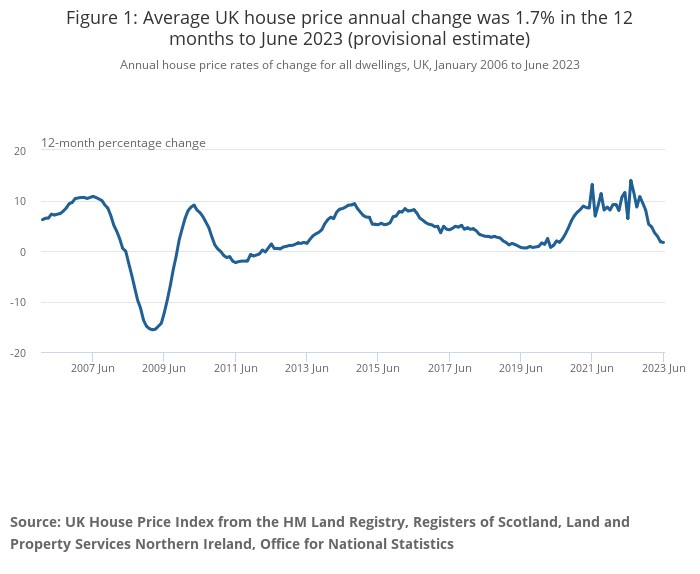
On a seasonally adjusted basis, the average UK house price rose 0.3% month-on-month in June, having fallen 0.3% in May.
Gabriella Dickens at Pantheon Macroeconomics believes the rise in the official measure of house prices in June “is not a convincing sign that the market has shrugged off the recent renewed rise in mortgage rates, given that it is based on completed transactions, which in turn depend on mortgage offers from several months ago.”
“Timelier measures of house prices have softened,” she pointed out.
“While the drop in energy bills and strong wage growth should free up some cash to put towards housing costs, caution among households remains high and expectations that house prices will fall further are entrenched.”
“As a result, we think prices have some way to fall yet; we continue to look for an 8% peak-to-trough fall,” she added.
11:15am: Lionesses go for glory
For those looking for news of the women's World Cup semi-final, Proactive's Leo Grieco is across the action and providing a blow-by-blow account of the game right here.
It's 0-0 in the early exchanges, and with apologies to Australian readers, "Come on England!"
10:56am: Aviva lifted by general insurance and favourable weather
Aviva’s results have been well received with shares marked up 2.8% with analysts at UBS pointing out most financial metrics were ahead of expectations.
The Swiss bank said solvency of 202% which was 3 percentage points ahead of consensus, cash remittances were 9% ahead of expectations, cost savings are now expected a year early by 2023 while operating profit was 2% ahead of consensus although in line with the UBS prediction.
It said life operating profit appears to be lower than expectations but general insurance profit beat expectations driven by higher investment returns in the UK and Canada.
There were also favourable weather impacts, UBS said, without which the core operating ratio would have missed expectations, as against a 0.9 percentage points beat.
UBS kept a buy rating on Aviva but expected a neutral reaction with low quality of earnings in general insurance, offset by high solvency ratio of 202%.
Richard Hunter, Head of Markets at interactive investor, commented “Aviva has delivered a strong set of numbers, with confidence underlined by an upbeat outlook where the positive momentum is expected to continue.”
“There are a number of areas in which Aviva continues to prosper,” he said.
“There is an element of inter-dependency in the products it offers, providing scope for cross-selling opportunities as well as the bulk annuities business where Aviva Investors can take on the investment mantle.”
“In addition, the group has reduced its geographical footprint to concentrate on the UK, Ireland and Canada where it has dominant positions in each territory,” he added.
He concluded: “Aviva may be in the driving seat for those factors within its control, but wider questions have weighed heavily on the sector as a whole and this could take some time to reverse.”
10:28am: Wholesale prices inflation falls in July
Away from the CPI figures for a moment and news that wholesale prices inflation fell 3.3% in the year to July, down from a fall of 2.9% in the year to June 2023.
The data from the ONS producer output (factory gate) prices fell by 0.8% in July, down from a rise of 0.3% in the year to June 2023.
On a monthly basis, producer input prices fell by 0.4% while output prices rose by 0.1% in July.
Inputs of crude oil and petroleum products provided the largest downward contributions to the annual rates of input and output inflation, respectively.
10:02am: Services inflation hit by one-offs, core figure is making progress
As always there is plenty of reaction to the inflation figures but two areas which are getting a lot of attention are the core inflation number – which excludes food and energy – and the rise in services inflation.
But economists have pointed out both figures may hide a truer picture.
The core inflation figure was unchanged in July at 6.9% but Simon French at Panmure Gordon explains “the idea there is no progress on core inflation (since early 2023) is not correct.”
He tweeted: “looking at more timely indicators (a rolling 3m average of monthly UK inflation) this has come down to 0.42%” month on month growth.
There is proving to be quite a long legacy of the Spring 2023 surge in UK core inflation - driving elevated annual inflation numbers. But looking at more timely indicators (a rolling 3m average of monthly UK inflation) this has come down to 0.42% MoM. Whatever your takeaway from… https://t.co/LmIC6cY7Zn pic.twitter.com/VOhoefZNOZ
— Simon French (@shjfrench) August 16, 2023
Meanwhile, James Smith at ING has taken a closer look at services inflation which rose by 7.4% in the 12 months to July, up from 7.2% in June.
He noted this is part of the CPI data the Bank of England is most concerned about.
But Smith said the rise was down to two factors that are unlikely to meet the BoE’s definition of “persistent” trends.
“The most eye-catching change was rents, which rose by 1.7% between June and July, which we make out to be comfortably the highest month-on-month change in this category since 2005,” he said.
He thinks the jump seems unlikely to be repeated.
“We also saw a larger increase in airfares at the start of the summer holidays than we did last year, which also helped to drive services inflation higher,” Smith noted, adding “this is a highly volatile category.”
9:34am: Admiral mitigates rising claims and inflation with higher prices
Shares in insures Admiral sit top of the FTSE 100 risers after its well received first-half results which saw turnover and profit rise although the dividend was cut.
Milena Mondini de Focatiis, chief executive officer, said: “The group has once again delivered a solid performance and strong growth in the context of a challenging market, although we believe that the cycle is turning."
Russ Mould at AJ Bell explained "the motor insurance market was a great place to be during the pandemic, no-one was on the road but they still needed to keep their vehicles insured. This meant the premiums piled up while businesses like Admiral were paying out relatively few claims."
But he noted "that trend has reversed now and the cost of claims has been subject to the same inflationary pressures as everything else."
Rob Murphy at Edison Group pointed out despite this inflationary backdrop "Admiral's focus on maintaining pricing discipline and medium-term profitability has allowed them to navigate these difficulties."
Matt Britzman at Hargreaves Lansdown said: "Admiral is managing the challenging backdrop well with some pretty serious price hikes now starting to feed through to improved performance."
"Conditions are likely to remain tough over the rest of the year, but Admiral should be able to continue its string of outperformance versus peers with selective underwriting and strong pricing power," he added.
Murphy at Edison Group added: "The company's proactive approach in enhancing its data and technology capabilities has allowed it to innovate and positioned it well for the long term.”
Russ Mould at AJ Bell also noted "the company seems to think the cycle is turning and shareholders will hope that, as it does, Admiral can return to its previous track record of impressive performance.”
Shares rose 6.7% to 2,346p while shares in Direct Line jumped 6.9% to 161.58p.
9:02am: Sterling rises as market bets on more rate rises
The pound has risen sharply after the inflation figures which has economists believe cement a 25 basis point interest rate rise at the next MPC meeting.
Sterling has climbed 0.25% to $1.2741 after the figures showed core inflation remains stubbornly high while services inflation also rose.
Susannah Streeter at Hargreaves Lansdown noted the move reflected "big bets on the Bank of England pushing up interest rates again in September by another 25 basis points to 5.5%."
The figures come hot on the heels of data showing wage growth hit a record high adding to the headaches faced by the Bank of England as it plots its next monetary policy move
8:49am: Inflation figures cement rate rise in September
The FTSE 100 has ralled from earlier lows as it looks to recoup some of Tuesday's heavy losses.
The inflation numbers continue to take centre stage following the sharp fall in July although the core figure remained stubbornly high.
Susannah Streeter at Hargreaves Lansdown said: the fall "will come as a big sigh of relief amid cost-of-living pain, but underlying prices are staying uncomfortably stubborn."
"When you strip out volatile food and fuel prices, which have fallen back more substantially, there has been no slowdown in rate of increases which is highly disappointing," she felt.
"Core CPI flatlined at 6.9% in July, indicating that the headline rate might not budge much more immediately and there are some signs it could even edge back upwards," she added.
What does it mean for interest rates. Well while a rise in September appears nailed on, there is some hope that could be the last in the current cycle.
James Smith at ING Economics said the figures “cement a September rate hike, especially after yesterday’s stubbornly-high wage growth figures.”
He did point out there are another set of both price and wage data before the September meeting, and another round of numbers before November’s meeting.
“While we don’t rule out another rate hike in November, the committee appears to be slowly laying the ground for a pause.”
“Barring unpleasant data surprises before November, our base case is that September’s hike will be the last.”
Danni Hewson at AJ Bell feels the figures "buy the government a bit of breathing space and it seems Rishi Sunak’s five percent target is now achievable."
But she said "there will be little cause for celebration in the hallowed halls of Threadneedle Street."
“It’s the core figure that will keep pressure on the Bank of England to keep raising interest rates until the sticky tendrils have been eradicated like weeds denied water."
8:15am: FTSE edges lower, rate rise still expected
The FTSE 100 has opened in the red, hit by falls in US markets on Monday, and as investos digest figures which showed a sharp fall in inflation.
At 8.15am London's lead index was down 16.71 points, 0.2%, at 7,372.93 while the FTSE 250 was down 18.64 points, 0.1%, at 18,641.11.
The sharp fall in inflation in July was broadly in line with City expectations although the core figure, excluding food and energy, refused to budge, and was a touch above forecast.
The EY ITEM Cllub said: "Inflation falling significantly in July was unsurprising, given last month’s cut in energy bills."
But it noted "core inflation remained at 6.9% and services inflation rose by a bit more than the Bank of England had expected," and "combined with the latest heated pay data, another rise in interest rates is looking very likely."
Samuel Tombs at Pantheon Macroeconomics thinks "the recent sudden increase in labour market slack should help to bear down on wage growth over the coming months, easing the upward pressure on services prices."
He believes that the headline rate of CPI inflation will average about 4.7% in the fourth quarter and will be hovering between 2% and 3% for most of 2024, enabling the MPC to stop its tightening cycle soon and then begin to reduce interest rates, slowly, next year.
But, he expects a 25 basis points increase at September's Monetary Policy Committee meeting.
Away from inflation and Aviva PLC (LSE:AV.) jumped 1.7% as it beat expectations in the first half and said it was on track to deliver cost cutting targets a year ahead of schedule.
Richard Hunter at interactive investor said: "Aviva has delivered a strong set of numbers, with confidence underlined by an upbeat outlook where the positive momentum is expected to continue."
Another insurer heading upwards was Admiral Group Plc (LSE:ADM) which jumped 5.1% after its results.
Matt Britzman at Hargreaves Lansdown said: "Admiral is managing the challenging backdrop well with some pretty serious price hikes now starting to feed through to improved performance."
"Conditions are likely to remain tough over the rest of the year, but Admiral should be able to continue its string of outperformance versus peers with selective underwriting and strong pricing power," he added.
7:52am: Admiral cuts dividend but profit grows
Another insurer reporting numbers today is Admiral Group Plc (LSE:ADM) which posted higher turnover and profit in the first six months of the year and said it believed the cycle “is turning.”
But the insurer cut the dividend by 15% to 51p from 60p in what it called a “challenging marker.”
Milena Mondini de Focatiis, chief executive officer said: “The Group has once again delivered a solid performance and strong growth in the context of a challenging market, although we believe that the cycle is turning.”
“Inflation persists, but we have navigated the cycle well, maintaining pricing discipline and a focus on medium-term profitability.”
Pre-tax profit in the six months to June 30 rose 4% to £233.9 million from £224.6 million the year before and turnover jumped 21% to £2.24 billion from £1.85 billion.
Admiral’s solvency ratio fell 3 percentage points to 182% from 185%.
The group’s UK motor business delivered a profit of £298 million.
The firm said as it increased prices its number of customers had fallen but it said it was on a “strong footing to leverage improving market conditions.”
7:35am: Aviva operating profit tops forecasts
Away from the inflation numbers and FTSE100-listed insurer Aviva PLC (LSE:AV.) said it was on track to deliver its cost reduction plans a year ahead of target as it unveiled better-than-expected half-year profit.
Amanda Blanc, group chief executive officer, said: “We expect to exceed our financial targets and we are making progress each quarter.”
The insurer expects full year 2023 operating profit to grow between 5% to 7% from £1.35 billion in 2022 and said it was to exceed its Solvency II operating own funds generation target of £1.5 billion per annum by 2024 and its cash remittance target of more than £5.4 billion cumulative (2022-24).
It also expects to deliver its target of £750 million gross cost reduction by 2024 one year early.
Group operating profit rose 8% to £715 million from £661 million in the second half of the prior year, ahead of forecasts of £701 million, while operating EPS jumped 10% to 19.9p from 18.1p in the previous half-year.
The dividend was boosted 8% to 11.1p and expects to pay a dividend of around 33.4p for 2023, with low-to-mid single digit growth in the cash cost of the dividend thereafter.
General Insurance gross written premiums (GWP) grew 12% to £5.27 billion with UK&I General Insurance GWP up 13% to £3.22 billion.
UK personal lines GW grew 16% driven by strong rate increases mitigating inflationary pressures as well as new product propositions.
7:07am: Inflation falls sharply in July, core remains sticky
Good morning, the early focus will be the UK inflation numbers although results from Aviva and Admiral will also grab investors attention.
But we start with news that the consumer prices index rose by 6.8% in the 12 months to July, down from 7.9% in June, and in line with predictions from the Bank of England and the City consensus.
Annual inflation slowed again in July 2023.
▪️ Consumer Prices Index including owner occupiers’ housing costs (CPIH) rose by 6.4% in the 12 months to July 2023, down from 7.3% in June
▪️ Consumer Prices Index (CPI) rose by 6.8%, down from 7.9% in June
— Office for National Statistics (ONS) (@ONS) August 16, 2023
On a monthly basis, CPI fell by 0.4% in July, compared with a rise of 0.6% in July 2022.
Core CPI (excluding energy, food, alcohol and tobacco) rose by 6.9% in the 12 months to July, unchanged from June, and ahead of forecasts of 6.8%.
Falling gas and electricity prices provided the largest downward contributions to the monthly change in CPIH and CPI annual rates; food prices rose in July 2023 but by less than in July 2022, also leading to an easing in the annual inflation rates.
Hotels and passenger transport by air were the classes that provided the largest offsetting upward contributions to the change in the rate.
The figures come a day after figures from the ONS showed that between April to June 2023, annual growth in regular pay (excluding bonuses) was 7.8%; the highest regular annual growth rate since comparable records began in 2001.
Annual growth in employees’ average total pay (including bonuses) was 8.2% in April to June 2023.
UK grocery price inflation fell sharply in the past month as the cost of staples such as milk and sunflower oil eased, according to figures from Kantar.
In the four weeks to 6 August, grocery price inflation fell by 2.2 percentage points to 12.7% while overall take-home grocery sales increased by 6.5% over the same period, down from 10.4% last month.
We'll have more on this story throughout the day.