
MFS Investment Management chief economist Erik S. Weisman, PhD, asks the question we’ve all been contemplating – Are we going to have a recession or not?
“Amid the sharpest rise in inflation and interest rates in more than four decades, investors have been on recession watch for some time,” Weisman writes in a market insights report.
“But lately, the data suggest — at a minimum — that the onset of a recession has been postponed.”
Weisman points to improving forecasts for the US’s first quarter GDP data, decent income generation, falling jobless claims and better durable good orders for the optimistic outlook.
“Taken together, consumers appear to be plugging along. Looking at these numbers, you’d have no idea that we went through a mini banking crisis just a few months ago given its minimal impact on the availability of credit,” he said.
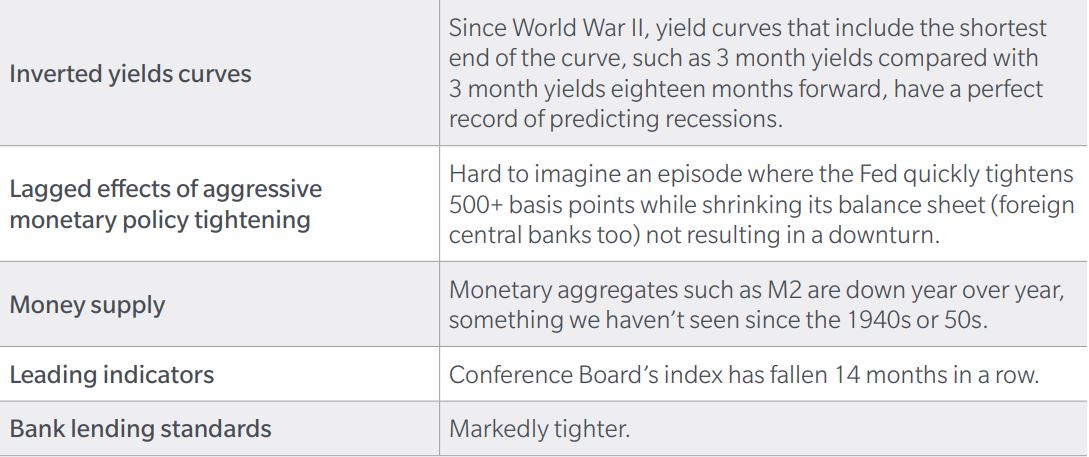
“However, forward-looking indicators are less rosy, so I still think the most likely scenario is that we will have a recession, though the timing remains murky.”
Forward looking indicators suggest trouble ahead
Historical indicators of recession.
“While a recession doesn’t look imminent, monetary policy takes time to work its way through the economy,” Weisman explained.
“Think about businesses that sign contracts that last 12,18 or 24 months. The Fed can raise rates an awful lot during those periods and not have an immediate impact on the economy.
“You might not feel the full impact of these hikes for 12 to 24 months — we’re in that window now.”
Central banks rebuilding credibility
Weisman believes central banks damaged their credibility with inaccurate forecasts, sticking to the narrative of pandemic-driven supply chain disruptions driving "transitionary" inflation for too long.
“Looking ahead, I’m concerned that they may overcompensate and remain more hawkish than expected,” Weisman cautioned.
“With that in mind, it appears the persistent strength of the US labour market is incompatible with getting inflation back into its box.
“If the labour market is strong and income generation is robust, that allows the consumer to spend and should keep inflation higher than it would be otherwise, and that won’t get inflation where the Fed wants it to be.
“So, it should be the case that you’ve got to weaken the labour market in order for the Fed to meet its inflation targets.”
Weisman questions whether central bankers will have the ‘fortitude’ to maintain rates at restrictive levels as the economy experiences a sharp downturn.
He ponders whether they will return to form by easing policy at the ‘first sign of trouble’, potentially repeating past attempts to revitalise the markets with a so-called “Fed put” by directly affecting quantitative easing and similar policy measures.
“At that point,” says Weisman, “Central bankers will need to choose the policy error of least regret. Do they deepen a recession by maintaining restrictive policy or do they rekindle inflation by easing too soon?”
Implications for markets
“For market rates to fall materially, I think labour markets need to weaken, inflation needs to fall more quickly and the Fed needs to signal that its done hiking,” Weisman concludes.
“Notwithstanding the promising inflation and employment readings in June, I think the Fed needs to see several months of similar data before it’s willing to signal that the tightening cycle has come to an end.”