
Hopes were high for native advertising platform Dianomi PLC (AIM:DNM) when it was listed on the London Stock Exchange in the roaring days of May 2021.
It was an ideal time to go public for a top valuation.
The stock market was in the middle of one the best years on record and investors were piling in on the back of recklessly loose monetary policy.
When Dianomi came to the public markets, it came with roster of over 300 premium publishers and over 400 high-end advertisers, predominantly in the financial services sector.
In the UK alone, Hargreaves Lansdown, Barclays and Baillie Gifford used Dianomi to connect them with readers of Reuters, Bloomberg and even this publication, Proactive Investors, to name a few.
Not even the spectre of the third-party cookie phase-out, which is having, and will have, a serious impact on the nature of advertising technology, seemed to worry Dianomi going into the public markets.
That is because, as a native advertising platform, Dianomi is much more about in-content advertising rather than those individually targeted popups at the crux of the third-party cookie crackdown.
Similar to how BuzzFeed makes money, Dianomi’s advertising strategy is one of seamless (as possible) integration with popular media sites.
Anyone who has seen the ‘sponsored financial content’ ad units on Wall Street Journal, Forbes or Business Insider is already aware of Dianomi’s work.
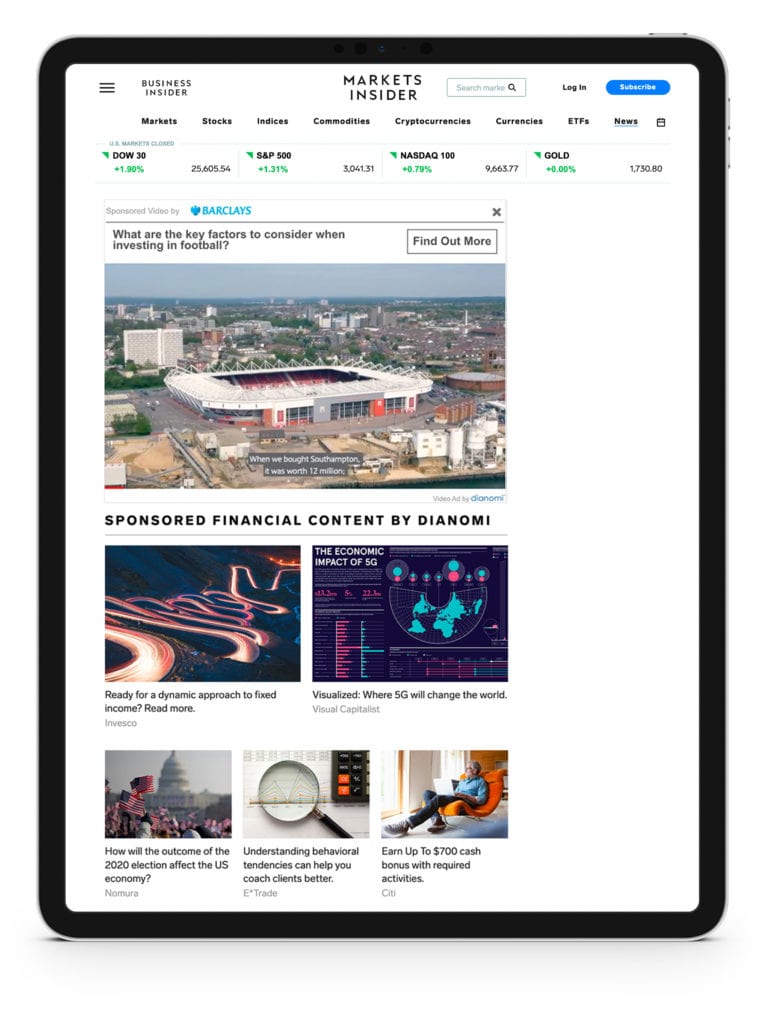
Native advertising offers a more seamless form of brand awareness than intrusive popups – Credit: Dianomi
There were many large-scale advertising businesses doing this already, but Dianomi saw a niche in the premium business and financial services sectors to offer a classier breed of clickbait.
It worked pretty well. Within the first four months of going public, Dianomi reached an all-time high of 485p with a market capitalisation of more than £145mln.
Fast forward to today, and it is worth less than 10% of that. Shares plummed nearly 40% in the month of July alone, spurred by a grim trading update on the 17th.
In that statement, Dianomi warned that the decline in traffic volumes has been a key challenge in 2023, not just for Dianomi, but for the sector as a whole.
Traffic levels across the key publishers Dianomi works with were down by up to 30% in the six months to June 30 when comparing the same period in 2022.
Dianomi told shareholders to expect an 18% decrease in revenues when audited results are released.
But shareholders didn’t need to wait for this profit warning to see that things weren’t all rosy at Dianomi.
The clickbait downcycle
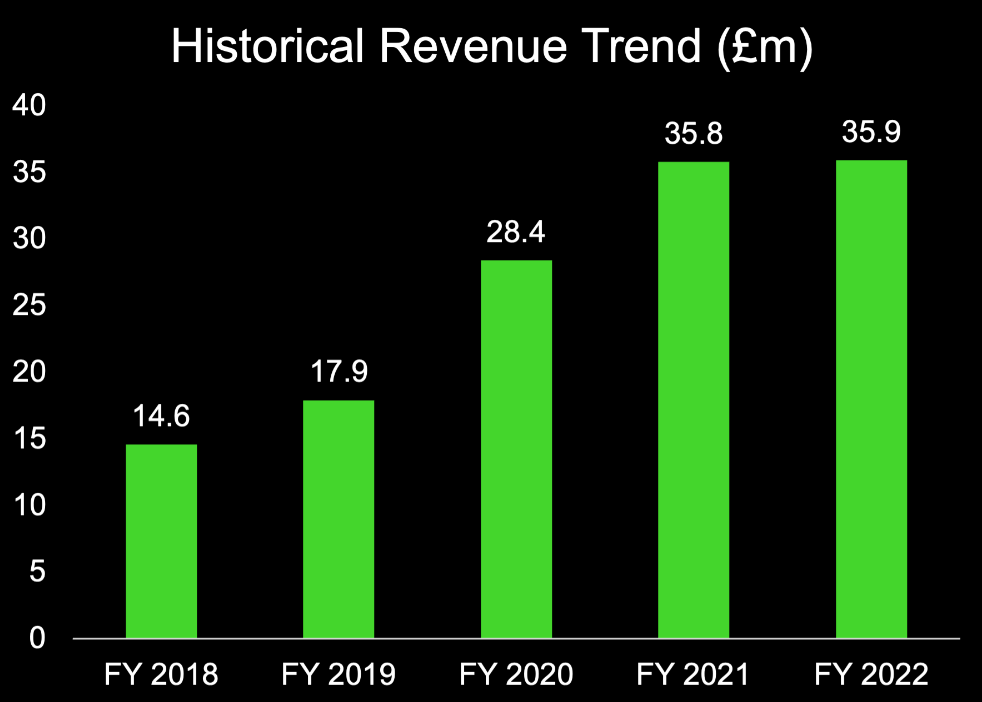
Earlier this year, the group’s audited financials proved that revenues had nearly flatlined in 2022, bumping up ever so slightly from £35.8mln to £35.9mln.
Earnings were even worse, with underlying EBITDA nearly halving to £1.6mln.
Credit: Dianomi
Similar in another way to BuzzFeed, business at Dianomi seems to be flailing.
Has the internet collectively said “enough” to native advertising, or clickbait, as it is less affectionately known?
Perhaps, but at the same time, native advertising will naturally become the standard as third-party cookies get phased out.
Furthermore, as noted by chumbox-peddlers Taboola, at least one in four internet surfers use ad blockers to remove annoying popups and banners.
This makes contextual and in-content advertising like that provided by Dianomi even more important for connecting brands with audiences going forward.
Yet, plainly speaking, Dianomi just isn’t getting the engagement it wants or needs.
The group works on a cost-per-click model, meaning the more clicks one of its targeted ads gets, the more money Dianomi gets. The fewer clicks one of its targeted ads gets, the less money Dianomi gets. It’s as simple as that.
There are fewer clicks to go around in a global downturn when advertising budgets are slashed, though Dianomi’s niche client base must take some of the blame for the group’s hard times.
Dianomi has previously hyped its “premium advertisers and publishers” roster.
“While there are others in the native advertising and contextual spaces, none have the reach or access to premium business and financial content in our vertical,” chief executive and co-founder Rupert Hodson has said in the past.
“While native advertising has received its share of criticism, with some people referring to it as ‘clickbait’, we approach sponsored content differently,” Hodson told media publication WNIP.
“Our focus from day one has been helping premium brands deliver native advertisements that people want to see in publications people want to read, honing in on the right audience and context.”
That sounded great in 2020, but following what has become a period of inflation and interest rate hikes, the premium business segment just ain’t spending what it used to on advertising.
The global ad industry walked itself into a downturn at the back end of 2022 as budgets began tightening.
Can the appetite for premium clickbait recover once this economic downturn passes us by? Dianomi probably hopes so.
Proactive has reached out to Dianomi for a contribution to this article.