
Thames Water remains locked in talks with investors as it battles to avoid the ignominy of being placed back in public ownership after decades in private hands.
The UK’s largest water company said it “is continuing to work constructively with its shareholders in relation to the further equity funding expected to be required to support Thames Water's turnaround and investment plans.”
The company was responding to press speculation that the government is drawing up contingency plans for the group’s collapse amid jitters in Whitehall over its ability to service its £14bn debt-pile.
It’s quite a fall from grace for the UK’s largest water company which was privatised in 1989, a move heralded by the Prime Minister at the time, Margaret Thatcher.
She vowed it would lead to a new era of investment, improve water quality and bring down bills. Her government also wrote off all debts and established Ofwat to regulate the industry.
After being privatised, Thames Water was taken over by German utility RWE (ETR:RWE) in 2001 but after criticism of missed leakage targets in the UK, RWE sold the business for £8bn to Kemble Water Holdings, a consortium led by the Australian Macquarie Group.
In 2012, there was another shareholder shake-up with some of the company's stock acquired by the BT Pension Scheme (13%), the Abu Dhabi Investment Authority (9.9%) and the China Investment Corporation (8.7%).
In 2017, Macquarie Group sold its remaining stake in Thames Water's holding company to Ontario Municipal Employees Retirement System and the Kuwait Investment Authority.
Macquarie has been criticised for its role in damaging the finances of Thames. By the time Macquarie sold its final stake in Thames in 2017, it had paid out £2.7bn in dividends and £2.2bn in loans. Meanwhile, the pension deficit grew from £18mln in 2006 to £380mln in 2017 while its debt increased steeply from £3.4bn in 2007 to £10.8bn.
Despite being debt-free when privatised, Thames Water now has debts of around £14bn.
Last year the company’s shareholders invested £500mln in the company - the first equity injection since privatisation - and pledged a further £1bn subject to conditions, acknowledging that “further shareholder support may be required”.
Why? Well, the sector is under pressure from rising inflation, including soaring energy and chemical prices and higher interest payments on its debts.
S&P, the rating agency, has negative outlooks for two-thirds of the UK water companies it rates - indicating the possibility of downgrades as the result of weaker financial resilience.
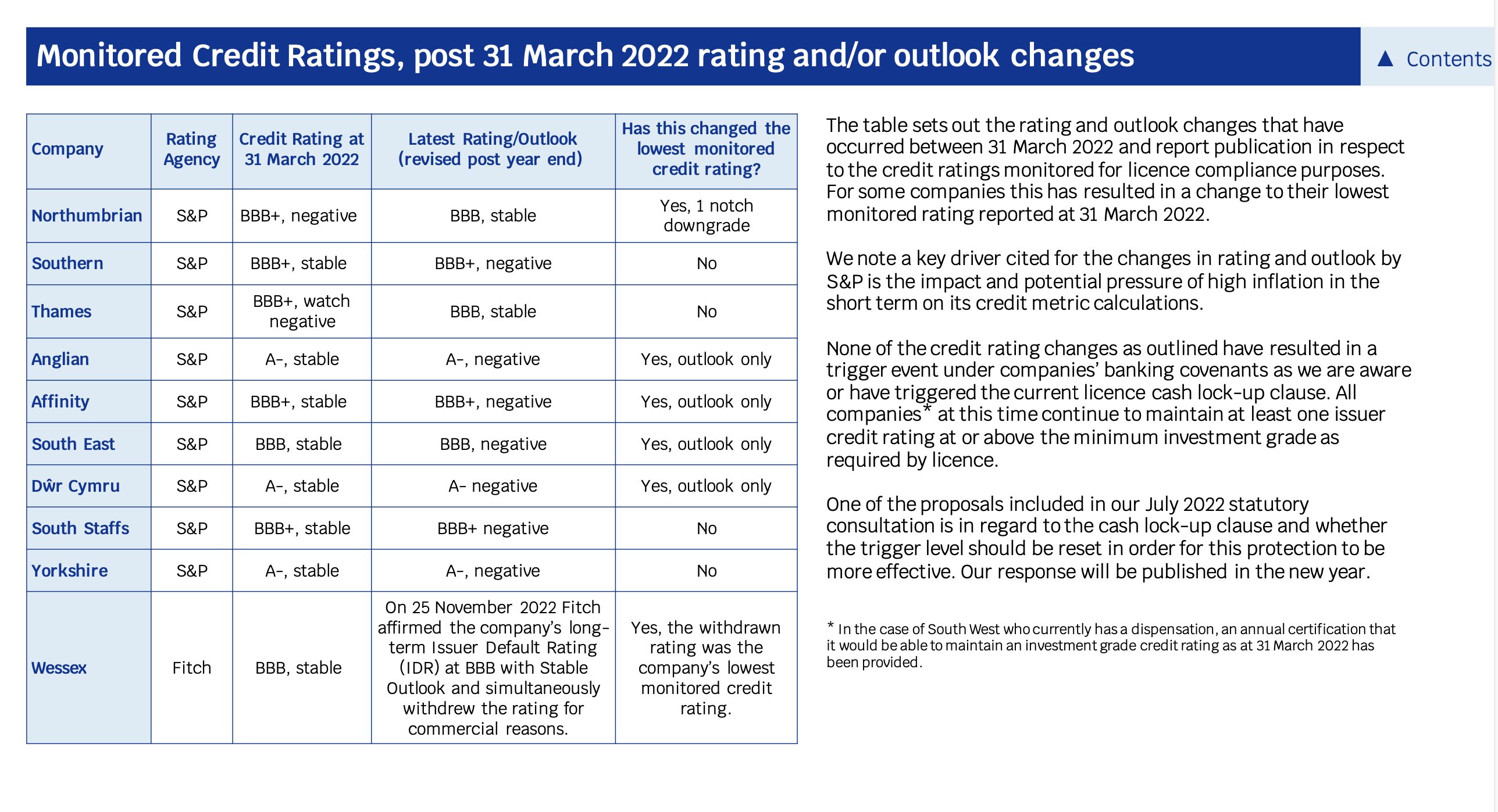
More than half of the sector’s debt on average is inflation-linked, putting pressure on companies in the current environment.
Ofwat said in December that it was concerned about the financial resilience of several water companies, Thames being one of them.
Water companies and the industry regulator Ofwat have been slammed for their inaction in dealing with leaks while sewage has been pumped onto the country’s beaches.
Musician Feargal Sharkey has been at the forefront exposing the scale of the industry’s short comings.
He said: “It really is time there was a public inquiry into the operation and regulation of the water industry.”
Cat Hobbs, Director of public ownership campaign group We Own It, said: "Water privatisation has totally failed and Thames Water being on the point of collapse makes this painfully clear."
"England has chosen to hand over its essential water infrastructure wholesale to privatised monopolies, owned by a handful of shareholders around the world."
"They’ve extracted £72bn in dividends while letting pipes leak and pouring sewage into our rivers and seas. And they’ve collectively built up a debt mountain of £53bn, although they started out in 1989 with zero debt."