
While industrial minerals don’t hold the same shine as gold or the excitement of lithium, they represent the core feedstock of our manufacturing, construction, and agriculture industries, arguably the bedrock of our societies.
In this article we’ll explore industrial mineral markets, the factors influencing them, and the ASX companies that are either already producing or exploring for them.
In this article:
- Silica sand
- Potash
- Kaolin
- Industrial minerals market movements
Silica sand
Silica sand is used primarily in construction applications like concentrate manufacturing and foundation construction.
Low impurity sands are also used in glassmaking, and at the highest purities in semiconductors, processors, photovoltaics for solar panels, and optical fibres.
In 2021 it represented a large market size value at US$21.6 billion, with a compounding annual growth rate (CAGR) of 6.5%, expected to reach US$35.75 billion in value by 2029.
On the high-purity end of the scale, growth is being driven by a sharp uptick in solar panel manufacturing and high-end technical applications.
Potash
Potash, also known as sulphate of potash or potassium sulphate, is a water-soluble inorganic compound used predominantly in fertilisers, providing the two key ingredients of potash and sulphur, which aid plant growth and resilience against disease.
The industry has been riding a rollercoaster in recent years, with demand forced lower by the COVID-19 pandemic in 2020 before skyrocketing to levels we haven’t seen since the 2007 Global Financial Crisis when Russia invaded Ukraine in 2022.
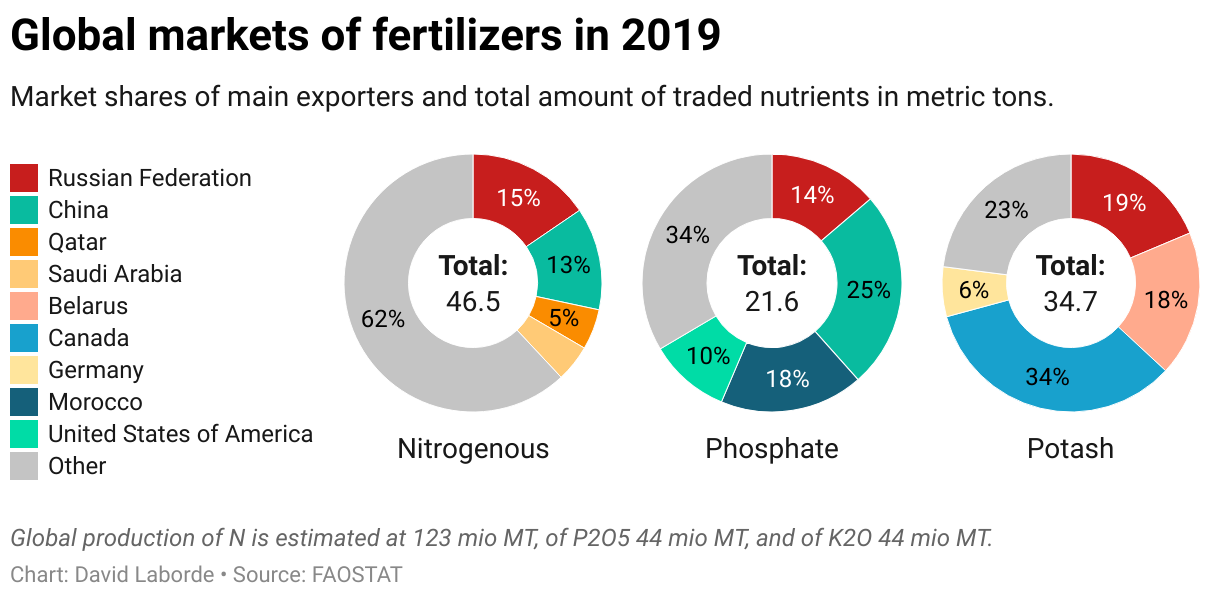
Russia and its ally Belarus occupy some 37% of the potash market together, eliminating a large trading source for most of the global economy due to trade sanctions brought again Russia because of the Ukraine invasion.
The SOP market was estimated to be US$4.5 billion in 2021, expected to grow at a CAGR of 4.8% to US$6.566 billion in 2029.
Kaolin
Now, a look a kaolin and its derivatives.
Kaolin, or kaolinised granite, is a type of aluminium silicate generally found in clay or granite and valued for its chemical inertness, absorbency, and inability to swell. It’s used mostly in coating and paper filler, easily mixed with other additives to achieve various end results.
Halloysite, a derivative of kaolin, has gained plenty of attention recently due to its unique characteristics, combining very strong mechanical properties, biocompatibility, flame retardancy and versatile surface chemistry within its nanotube structure.
The global halloysite market is expected to grow at a CAGR of 3% to 5% from 2021 to 2026, with demand mostly driven by catalysts, plastics additives, and fine china and porcelain.
The major growth drivers for the industry are in the construction and medical industries, with applications including polymers, thermoplastics, coatings, and more recently, creating high-purity alumina (HPA) for use in rechargeable batteries.
The global HPA market varies based on purity level (N4, N5 and N6) but overall was valued at US$1.3 billion in 2019, and is projected to reach US$4.8 billion by 2026, growing at a CAGR of 20.7%, which is exceptionally high.
Halloysite is considered one of the most studied clay minerals in the world, although none is currently being produced on Australian shores. In the next section we’ll look at companies looking to change that.
Industrial minerals market movements
Which ASX companies are making waves in the industrial minerals market?
Kaolin
Andromeda Metals
Andromeda Metals Ltd (ASX:ADN) achieved steady progress at the flagship Great White Project this quarter, securing approval for a Program for Environment Protection and Rehabilitation (PEPR) and permits for processing of up to 300,000 tonnes per annum (tpa) of ore, producing up to a nominal 150,000 tpa of halloysite-kaolin products.
ADN also received the details an independent study for Great White high reactivity metakaolin (HRM™), confirming positive benefits as a cost-effective solution to decarbonise concrete.
On the project itself, Andromeda drilled 12 holes for some 337 metres, targeting complimentary kaolin deposits for the Great White deposit.
On the R&D side of things, Andromeda is advancing research efforts to produce high purity alumina or HPA from its kaolin feedstock, a critical mineral vital to the rechargeable battery market and decarbonisation more broadly.
Newly appointed CEO and managing director Bob Katsiouleris said: “With regulatory approval for the Great White Project now locked-in, we are progressing discussions to secure the funding required and offtake agreements to underpin development and future expansion.”
Suvo Strategic Minerals
Suvo Strategic Minerals Ltd (ASX:SUV) is already actively producing hydrous kaolin products, having commissioned the Pittong processing plant on budget and ahead of schedule, and has executed two sales or purchase orders this quarter:
- Qingdao Minglang New Material Co., Ltd, covering up to 500 tonnes of hydrous kaolin (sales agreement).
- C&D Logistics Group Co Ltd covering up to 800 tonnes of hydrous kaolin (first purchase order).
SUV was able to achieve price premium for these new agreements compared to the weighted average selling price achieved in H2 CY2022.
Since Pittong’s commissioning Suvo has also validated its nameplate capacity – producing 1,004 tonnes over just a six-day period, a 245% uplift in production.
Finally, the company completed the acquisition of the Muchea Silica Sand Project, where Suvo will explore for high quality silica sands.
Silica
Altech Batteries
Altech Batteries Ltd (ASX:ATC) had a face lift this last quarter, switching its company name from Altech Chemicals to Altech Batteries to better represent ATC’s ambition to produce batteries that support electrification and the energy transition.
Altech also launched its CERENERGY 1.0 MWh GridPack design for renewable energy storage market, a non-lithium, sodium-alumina solid state battery capable of supporting energy grid storage.
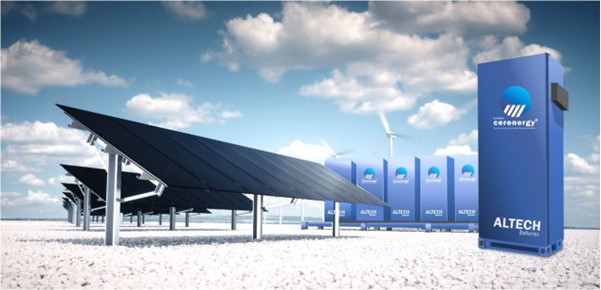
The fully contained, plug-and-play batteries are designed to be easy to transport, straight forward to install and safe in any weather conditions.
The company also made progress at the CERENERGY Battery Project, where the battery packs will be produced.
Altech produced a definitive feasibility study (DFS), hosted an expert workshop in Germany, selected all major equipment suppliers and began the early stages of off-take discussions while also exploring grant and funding opportunities with EU-based governments and banks.
Finally, the company’s Silumina Anodes Pilot Plant (which will feed anode material to the CERENERGY Battery Project) is also advancing at pace, with a DFS for a 10,000 tonner per annum plant in the works, and commissioning of the pilot plant’s wet circuit underway.
The on-site laboratory has also been completed and is currently being commissioned, although a long-lead calciner is still outstanding from South Africa, expected to be commissioned by the end of the third quarter this year.
Potash
Australian Potash
Australian Potash Ltd (ASX:APC) is maintaining shovel-ready status at the Lake Wells Sulphate of Potash (SOP) Project with technical and permitting work as it battles a bearish outlook for potash fertiliser in the Australian market.
The company also offered its second year of training at the Laverton Training Centre with two new nationally accredited vocational unites, and achieved the conditional sale of the Laverton Downs Project to fund the Lake Wells Project.
“With strong demand underpinning the global market for potassium fertilisers, and pundits predicting India’s population to exceed China’s in the near term indicating continued rapid expansion in the world’s population, the Australian equity market’s bearish sentiment towards the emerging potash sector appears at odds with other investment market,” APC managing director and CEO Matt Shackleton said.
“Australian Potash remains in a strong strategic position due in significant part to the continued support of its larger shareholder base.
“Conviction investment is typical of successful and long-term resources industry investors, and we are fortunate to count on our register such investors.
“At the date of this report, other than this corporate effort, the company’s team is holding the Lake Wells SOP Project in shovel-ready status, in the expectation that a successful process will introduce the necessary capital to commence the development of the LSOP.”
In 2021, the global potash fertiliser market was valued at US$26 billion, expected to grow at a CAGR of 4.66% to reach US$36.7 million by 2028.
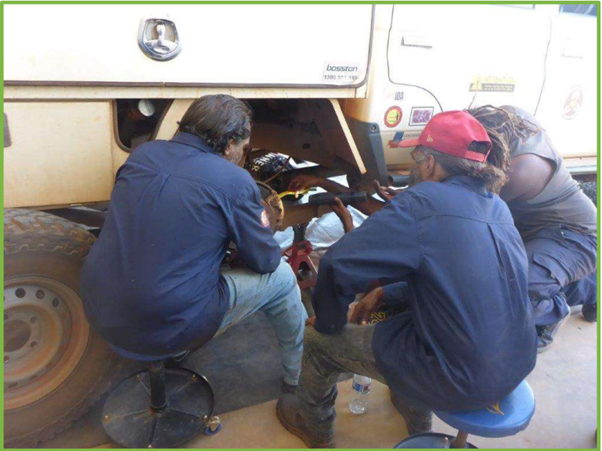
Automotive training at the Laverton Training Centre.
Highfield Resources
Highfield Resources Ltd (ASX:HFR) secured the last remaining licence required for full scale production at the Muga Potash Mine’s process plant, a vitally important milestone in the project’s development.
“This quarter has been arguably one of the most important ones in Highfield’s history,” CEO Ignacio Salazar said.
“After a lot of effort, the grant of the pending construction licence in Navarra for the process plant concludes the permitting phase for the company.
“My gratitude again to so many people who one way or another supported us in this challenging process.
“The addition of HSBC and Caja Rural de Navarra as lenders in the senior facility reconfirms the robustness of the project and our financing plan.
“The company will now focus on finalising the remaining financing needs of the project and start construction as soon as possible.”
HFR was well-funded to construct as of March 31, 2023, holding some A$9 million in cash on hand.
Next quarter, the company will:
- tender the decline construction and finalise the construction agreement with the company’s construction partner, Acciona; and
- progress negotiations with other sources of capital and equity financing for Muga with strategic partners, shareholders, brokers, investors, banks and other financial parties in collaboration with Endeavour Financial.
South Harz Potash
South Harz Potash Ltd (ASX:SHP) kicked off a pre-feasibility study for its flagship Ohmgebirge Potash Development with a team of leading industry consultant this quarter, appointing Hatch as team lead alongside engineering consultants ERCOSPLAN and K-UTEC Salt Technologies with geological support by mining consultant, Micon International Co Ltd.
The company also began environmental impact assessment and permitting, appointing Environmental Resources Management and CMS lawyers to front the process.
South Harz has narrowed down its site selection at Ohmgebirge to three leading zones, including one brownfield site, and has taken a five-tonne bulk sample from 790 metres of depth for process design test work and de-risking.
Finally, the company adopted a new Environmental, Social and Governance (ESG) policy in line with the company’s ongoing advancement of the Ohmgebirge Development and broader South Harz Potash Project, and held A$4.6 million in cash at the end of the quarter, with zero debt.
Reward Minerals
Reward Minerals Ltd (ASX:RWD) has been hard at work with laboratory programs this quarter, optimising its SOP processing technology to produce high-purity SOP (99.4% pure) with a concentration of 53.7% potassium oxide (K2O), 56.8% sulphate (SO4), 0.1% calcium (Ca) and <0.1% chlorine (Cl).
The company also kicked off an engineering scoping study for production of SOP from seawater derived and other high-sulphate brines, including RWD’s own Kumpupintil Lake (KP Lake) Project.
In non-SOP news, first pass reverse circulation (RC) drilling at Reward’s McKay Range joint venture (JV) Project with FMG Resources Pty Ltd, a wholly owned subsidiary of Fortescue Metals Group (ASX:FMG) Ltd, returned anomalous copper mineralisation from four of seven holes, up to 1 metre at 0.52% copper.
From here, Reward Minerals will concentrate on:
- advancement of the Reward SOP Process, international patent finalisation and licensing activities for third parties;
- advancing the engineering scoping study for the KP Lake Project and seawater derived brines based on the Reward Process;
- engagement with solar salt, fertilizer and seawater desalination companies worldwide to discuss the application of Reward’s technology to potential proposed SOP developments for possible joint venture participation; and
- Fortescue’s completion of drill site rehabilitation, analysis of thin sections and petrographic report, data review and follow-up drill target generation.