
UK inflation figures refused to budge below 10% once more, fueled by accelerating food and non-alcoholic drinks prices, but just how much does the cost of the weekly shop influence the headline figure and are customers being conned?
With prices of commodities such as wheat tumbling to a 20-month low in March, the continued gravity-defying rise in the prices of household favourites has prompted calls of greedflation.
Albert Edwards, a global strategist at Societe Generale, claimed in a recent note that corporations, particularly in developed economies like the US and UK, have used rising raw material costs amid the pandemic and the war in Ukraine as an “excuse” to raise prices and expand profit margins to new heights.
He stated he had never seen anything like the “unprecedented” and “astonishing” levels of corporate greedflation in his four decades working in finance.
“The end of greedflation must surely come. Otherwise, we may be looking at the end of capitalism,” he warned.
Food retailers in the UK have faced repeated accusations of profiteering with claims inflation has been used as a guise to hike prices faster and further in a bid to boost profits whilst at the same time claiming to be on the side of the customer.
Every little helps, so they claim.
But the TUC and others have said low-paid workers are being squeezed with this month’s increase in food and energy bills hammering household finances.
The trades union body pointed out food inflation is rising nearly three times faster than wages food prices rising by 18.3% in February, compared to 6.9% for nominal wage growth.
The TUC said the gap between food inflation and wage growth is the highest since current records began in 2000 and noted food inflation has tripled over the past year from in 5.8% in March 2022 to 19.6% in March 2023.
Just taking a look at some of the rises in the past 12 months and it's easy to see why shoppers are getting hot under the collar as they march up and down the aisles.
In the last 12 months the Office for National Statistics said the price of individual food goods has soared detailing the following increases: sugar has risen 42.1%, low-fat milk 38.8%, cheese and curd 33.6%, eggs 32%, pasta products and couscous 24.1%, butter 22.7%, ready-made meals 20.9%, jams, marmalades and honey 20.9%, bread 18.9%, fish 16.7%, pizza and quiche 17.2%, fruit 10.6%.
Prices of everyday food essentials such as porridge oats, cheddar and bread have rocketed by up to 80% in the last year, according to research by Which.
“Millions of people are struggling to put food on the table, with some parents telling us they are skipping meals just to make sure their children have something to eat," said Sue Davies, head of food policy at the consumer group.
“Supermarkets need to step up and do more to help their customers," she said, calling for food retailers to make sure their pricing is clear and ensuring there is access to affordable, healthy food.
Food weighting
But a fall in food prices alone will not be enough to bring inflation down by itself.
The ONS compiles the overall figure using the consumer prices index which logs prices for individual goods and services.
Weightings are given to each sector (out of 1,000) and adjusted, usually annually, to reflect the changing economic landscape.
The sector with the highest weighting is housing, water, electricity, gas and other fuels, followed by recreation and culture, restaurants and hotels and transport.
Food and non-alcoholic beverages sit in fifth place in the table although including alcoholic beverages and tobacco would push them to the top.
It has a 11.9% weighting in the CPI index and a 9.6% weighting in the CPIH index which includes housing.
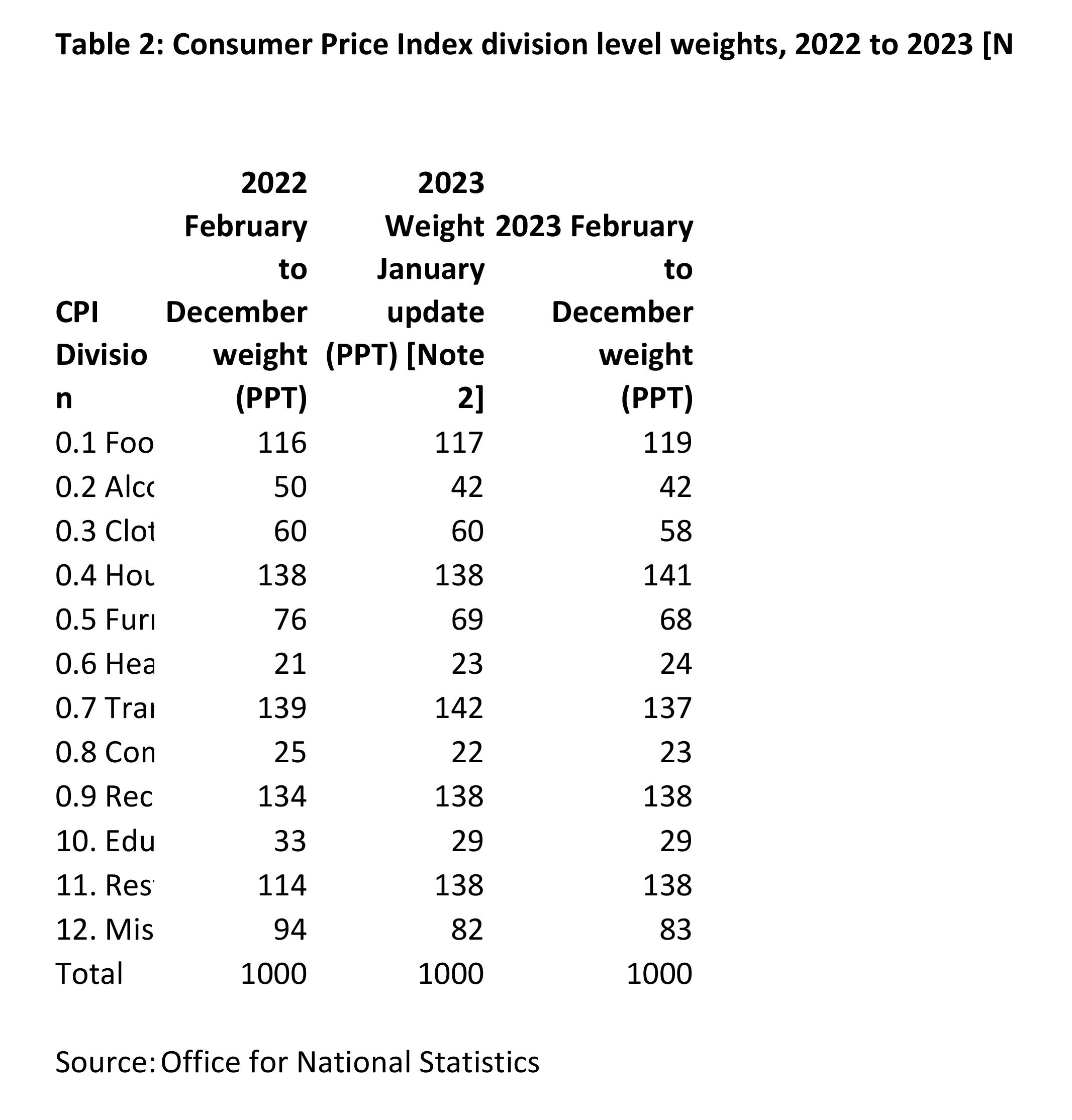
Within food individual weightings are given to different products. Bread and cereals; meat; milk, cheese and eggs; vegetables; and fresh or chilled fruit take the top five spots in terms of their impact on overall food prices with edible offal maybe unsurprisingly picking up the wooden spoon.
However, the rise in food prices have been dwarfed by 129.4% increase in gas prices and 66.7% jump in electricity prices reflecting the huge rises in the wake of the war in Ukraine.
It is here that CPI inflation is likely to fall in the coming months as the effect of last year's electricity/gas price hike filters out of the annual comparison.
Whether lower food prices add to that mix remains to be seen but their jaw dropping rises will continue to put supermarket bosses under the spotlight in the months to come.