
Provaris Energy Ltd (ASX:PV1) continues to make strong progress with project development activity to advance regional markets for hydrogen in Asia and in Europe.
In Australia, the owners engineer appointed for the Solar Precinct Early Works program at the Tiwi H2 Project remains on track to finalise the preferred solar farm design, generation capacity and updated cost estimates next month.
Also scheduled for April 2023 is finalisation of the project’s EIS Assessment’s Terms of Reference (ToR), including requirements of the EPBC Referral from the Australian Federal Government.
In Norway, pre-feasibility work is underway with Norwegian Hydrogen to fast-track project definition for a preferred site in the Nordic region, with the objective to confirm a first project that can deliver exports of hydrogen to Europe in 2027.
Upcoming milestones
Provaris’ managing director and CEO Martin Carolan said: “We are pleased with the progress of our Tiwi H2 Project in Australia and look forward to achieve important milestones in the upcoming months as we continue to focus on delivering on three key aspects of the project, including environmental approvals, securing land access and ongoing engagement with the Tiwi Islands community.
“It is also pleasing to see traction in Europe with increased awareness and interaction from hydrogen developers seeking to understand the benefits of our Compressed Hydrogen Supply Chain.
“Building strong pipeline”
“We are particularly thrilled to keep building a strong pipeline in that region with Norway providing a platform for multiple commercialisation opportunities.
“With the assistance of NORWEP and the Australian Government, recent discussions with several government and industry stakeholders, including Innovation Norway and ENOVA, have highlighted the advanced development of several coastal maritime hubs to supply green hydrogen and we look forward to progressing these discussions.”
Tiwi H2 progress
The company’s EIS submission for the Tiwi H2 Project centred on the Tiwi Islands, north of Darwin, will include social impact assessment, greenhouse gas abatement plan and noise assessment.
Submission is planned for early in quarter four and will cover both the Northern Territory and Federal approval process.
As well, the EIS Assessment’s ToR is scheduled to be finalised in April 2023 by the NT EPA and will include requirements of the EPBC Referral from the Australian Federal Government that was lodged in 2022.
Early works
Provaris is on track to deliver the Solar Precinct Early Works program in April 2023 with the owners engineer finalising the preferred solar farm design, the generation capacity, and the updated cost estimates for the solar precinct.
Due to weather and site access delays, Provaris will now undertake the site’s geotechnical drilling program in a single phase in mid-2023.
The company is also continuing discussions with stakeholders and drafting by advisors across various land access agreements required for the near-term detailed design activities and the long-term development agreement for Tiwi H2.
Other developments for the project are:
- Discussions with stakeholders and drafting by advisors are continuing across various land access agreements required for the near-term detailed design activities and the long-term development agreement for Tiwi H2.
- Submission of draft land agreements for Tiwi Land Council and Munupi Clan review are scheduled this quarter and agreement for the solar monitoring equipment is scheduled for mid-2023 to align with the region’s dry season.
Progress in Europe
Provaris is also making progress in Europe where its strategy is to accelerate the energy transition and provide energy security.
With Europe recently defining a 10 million tonnes per annum import market for renewable hydrogen by 2030 as part of its RePowerEu Plan, the company is well positioned to service the European market and contribute to this demand, with limited projects of scale on the fast track to FID.
Adding weight to this is the Norwegian-German declaration from January 2023 that demonstrates they are aligned with the RePowerEU Plan and both governments are working to realise a full-scale hydrogen value chain between the countries.
Well-positioned
With access to a renewable grid connection, growth in offshore wind capacity, government funding support to scale up the industry and proximity to Europe, Provaris is strategically positioned in Norway to supply Europe with low-cost and energy-efficient transport solutions using compression.
Provaris is advancing pre-feasibility work with Norwegian Hydrogen to fast-track the project definition for a preferred site in the Nordic region with the objective to confirm the first project that can deliver exports of hydrogen to Europe in 2027.
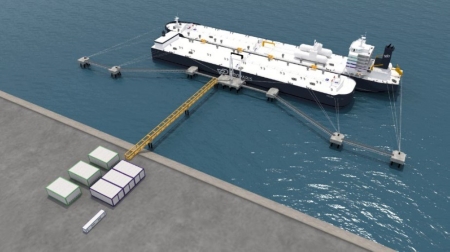
Further announcements will be made jointly with Norwegian Hydrogen in the upcoming months, with multiple sites, including Norway, identified as having export potential from the Nordic region.
Norway continues to support the scale-up of the industry with material funding support to assist with development and capex funding for coastal hubs and zero-emission shipping solutions.
Increasing interaction
Elsewhere in Europe, Provaris continues to see an increase in awareness and interaction from hydrogen developers seeking to understand the benefits of its Compressed Hydrogen Supply Chain and proprietary solutions for storage and transport to unlock the value of stranded renewable resources, understand how to lower the delivered cost of hydrogen or find solutions to the inefficiencies and complexity of alternative carriers being assessed.
With the focus of many development projects on compression as the method to transport green fuel to mobility, industrial or maritime industries, Provaris has a robust solution for regional hubs across Europe to accelerate the development of industrial-scale projects to include export solutions, and in some cases, tap into otherwise stranded renewable electricity whilst preserving the stability of the local power grid.
The company views the recent publication of the Renewable Energy Directive and associated Delegated Acts, to be voted on by the European Parliament by mid-June 2023, as a key catalyst (subject to approval) for the industry to progress binding offtakes and project FIDs, and commence the scale-up of the industry.