
Government support is urgently needed to keep Britain’s ‘diverse’ electric vehicle (EV) market competitive, the sector’s trade body said on Monday.
Incentives offered to manufacturers in the US and European Union need to be mirrored in the UK, the Society for Motor Manufacturers said in a report, arguing that the foundations for a strong domestic EV market were already there and gave it an edge.
“Britain boasts a firm foundation of EV production, backed by low carbon energy, outstanding research and development and a highly skilled and productive workforce,” SMMT boss Mike Hawes said.
“We must not squander these advantages.
“With other parts of the world turbocharging their support for the zero-emission vehicle transition, we need to step up to compete in this global race.”
The European Union introduced legislation last week making it easier for member states to grant subsidies for cleantech companies, including EV manufacturers.
This follows the Inflation Reduction Act in the US, which unlocked almost US$400bn worth of public funding for green firms from August last year, prompting investment in the sector to soar to US$89.5bn as of February.
Britain has been slated over its EV industry in recent months, meanwhile, which has struggled to attract investment and seen prospective battery producer Britishvolt fall at the first hurdle in raising funds for a £3.8bn gigafactory in Northumberland.
In 2022, Britain provided subsidies of just US$660 (£547) on average for EV purchases, compared to US$20,360 in Norway and US$7,500 in the US, as per data from Statista.
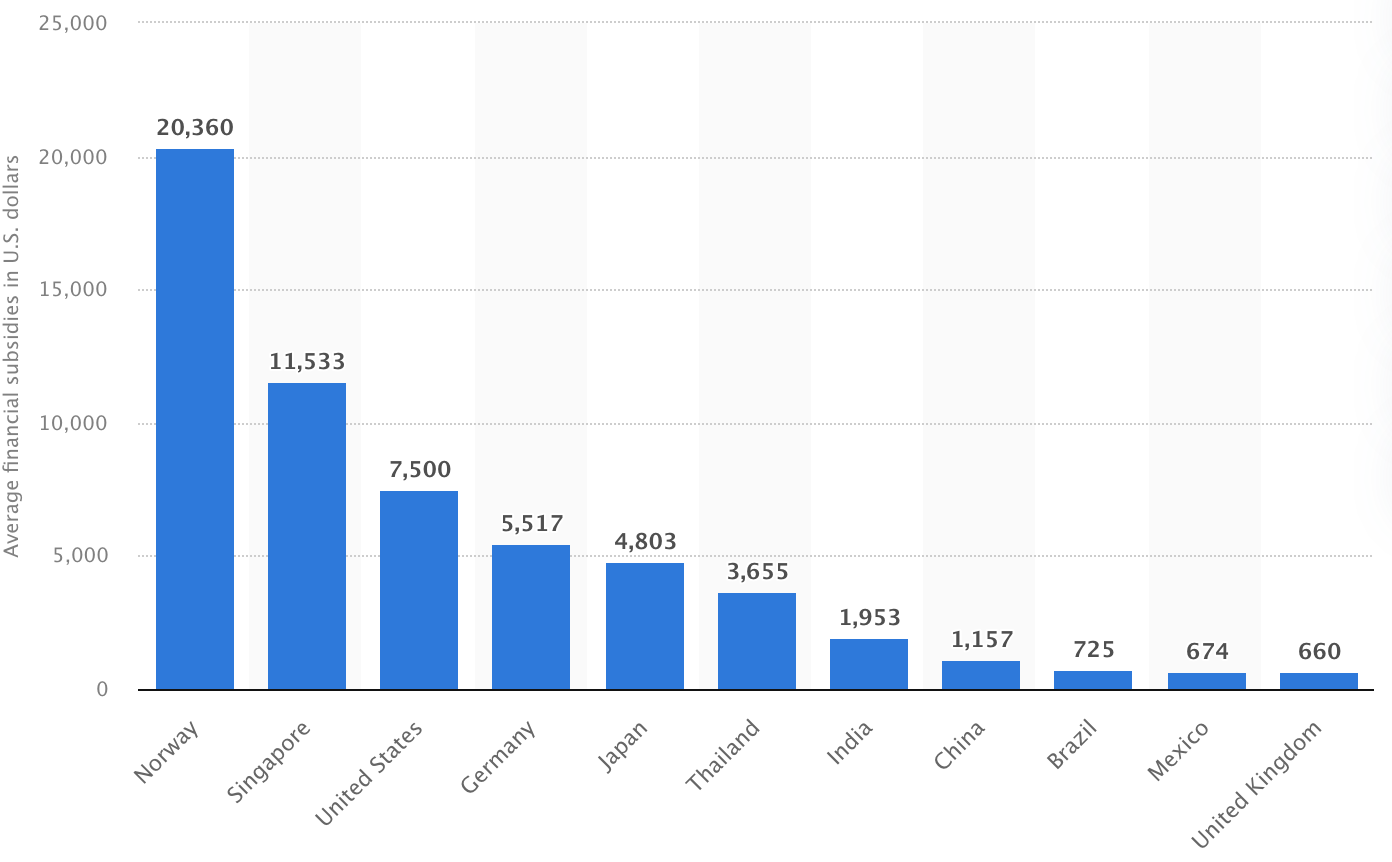
Average global EV financial subsidies at purchase in selected countries in 2022 - Statista
SMMT explained Britain has “one of the world’s most diverse” vehicle production sectors, citing semiconductor ‘clusters’ in the northeast, raw material processing in Scotland and hydrogen fuel cell development in Cornwall, to name a few.
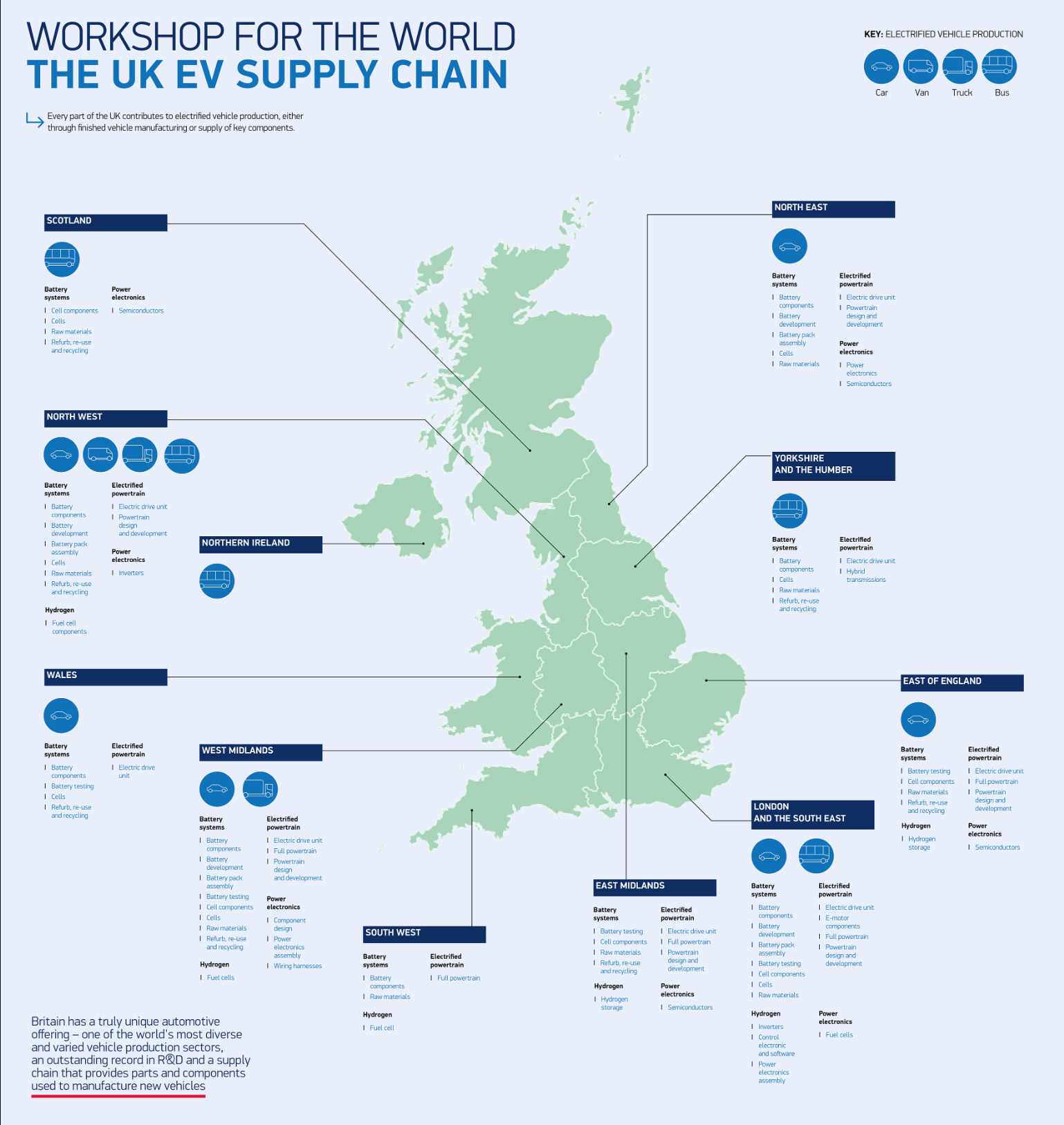
The UK EV supply chain - SMMT
Despite this, a lack of government-led incentives to bolster production has seen the likes of Tata Motor’s Jaguar Land Rover and start-up Arrival eyeing factory sites overseas.
SMMT urged the government to offer “more generous” incentives to manufacturers, while also upping support for clean tech start-ups and decoupling electricity and gas prices.
"Every part of the country has a stake in the switch and with fast, decisive action we can deliver for Britain the growth, jobs and green prosperity this country deserves," Hawes added.