
CuFe Ltd (ASX:CUF) has delivered a ‘significant’ maiden inferred mineral resource estimate (MRE) of 12.7 million tonnes at 55.4% iron at its 50%-owned Yarram Iron Ore Project, just 110 kilometres from Darwin Port in Northern Territory.
Notably, this JORC-compliant MRE includes a high-grade core of 5.6 million tonnes at 60.4% iron at the Kraken deposit and, importantly, 66% of the inferred resource is on an existing mining lease
Looking ahead, CuFe will progress several work streams to further develop the ore body knowledge of the inferred resources, with further exploration potential and opportunity for resource extensions remaining as it marches along the path towards production
High-grade DSO quality iron ore
CuFe executive director Mark Hancock said: “This maiden JORC inferred mineral resource for the Yarram Project confirms the presence of a well-located significant occurrence of high-grade direct shipping quality iron ore, along with an inventory of lower-grade material which we will investigate the ability to upgrade on-site or direct ship for beneficiation in overseas markets.
“We now have a clear picture of the scale and quality of the deposit and can concentrate on progressing development options and regulatory approvals as well as executing the next wave of work to improve the orebody knowledge and confidence level in the newly defined resource."
MRE summary
The overall inferred MRE is 12.7 million tonnes at 55.4% iron, 7.26 % silicon dioxide, 5.16% aluminium oxide and 0.2% phosphorous using a 48% iron cut-off, including a high-grade component of 5.6 million tonnes at 60.4% iron using a 55% iron cut-off.
Metallurgical test-work is in progress to assess the ability to upgrade the sub 55% iron material via simple techniques of sorting by size to remove the lower grade, finer fraction of the material.
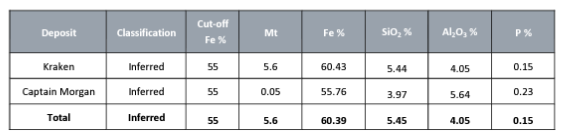
Inferred mineral resource estimate at 55% Fe Cut-off
Forward plan
CuFE is designing and planning a drill program to proceed following the wet season and that is likely to include diamond drilling for metallurgical, density and geotechnical test-work.
In parallel, mine planning studies have started and will incorporate the results of the low-grade bulk samples being analysed in a Perth Metallurgical Laboratory.
Environmental baseline data collection and engagement with the traditional owners have both kicked off and will also be an area of focus over 2023.
Hancock adds: “The project proximity to Darwin Port (110 kilometres) and nearby infrastructure has always been the key attraction to us of Yarram as it provides the opportunity for a low haulage and port cost, which is typically the key challenge for smaller iron ore projects.
“If the studies which we are kicking off come confirm that, it would enable the project to operate across the range of iron ore price cycles.
“The CuFe team's ability to execute and operate projects of this scale and style has been well demonstrated and this puts the company in a strong position as it progresses the project forward through the study and approval phases.”
Yarram Resource
The Yarram Project is within the Rum Jungle Mineral Field which forms part of the central domain Palaeoproterozic Pine Creek Orogen of the North Australian Craton.
Within the project, two distinct types of iron ore enrichment were observed at the Kraken and Captain Morgan deposits.
At Captain Morgant, the strike length of enrichment varies between 64 metres and 152 metres (NE-SW trend), width varies between 50 metres and 130 metres, and extends from surface to depth between 3 metres and 11 metres.
At Kraken, the strike length of enrichment is between 70 metres-355 metres (NE-SW trend), width varies between 38 metres-90 metres, and depth varies between 3 metres-9 metres from surface.
The deeper higher grade hematite replacement style enrichment hosted within the highly weathered brecciated siltstone is the most dominant style of mineralisation at the Kraken and Captain Morgan deposits.
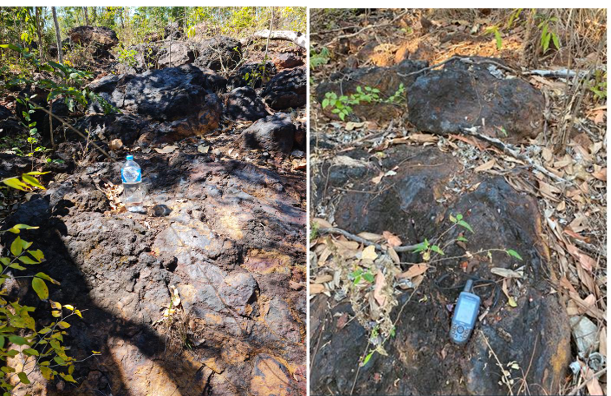
Massive hematite/goethite mineralisation outcropping at the Kraken Deposit.