
Energy regulator Ofgem will cut the amount suppliers can charge from April 1 by 23%, sending mixed signals to UK bill payers who will actually see prices rise.
Under its new price cap, suppliers will be able to charge the 'average household' up to £3,280 from April 1, a drop from £4,297 at the moment.
Households will see little relief though, as the government’s Energy Price Guarantee, which governs the amount consumers actually pay, is lifted from £2,500 to £3,000 on the same day, meaning bills could rise by a fifth.
Hargreaves Lansdown analyst Sarah Coles suggested the lower cap could mark good news given the government will have to fork out less than expected, paying £280 per average household on an annual basis, rather than the £1,797 difference between December and April.
“This provides the government with an opportunity to consider more tailored support in the Budget,” she said, adding it will likely still “feel particularly unfair” as bills continue rise.
Indeed, Ofgem’s 23% lower price cap has been driven by falling wholesale prices, but is still a fair way off reflecting the 64% drop in gas – which determines the wider market – from 344p per British thermal unit on December 1 to Tuesday’s 123.5p.
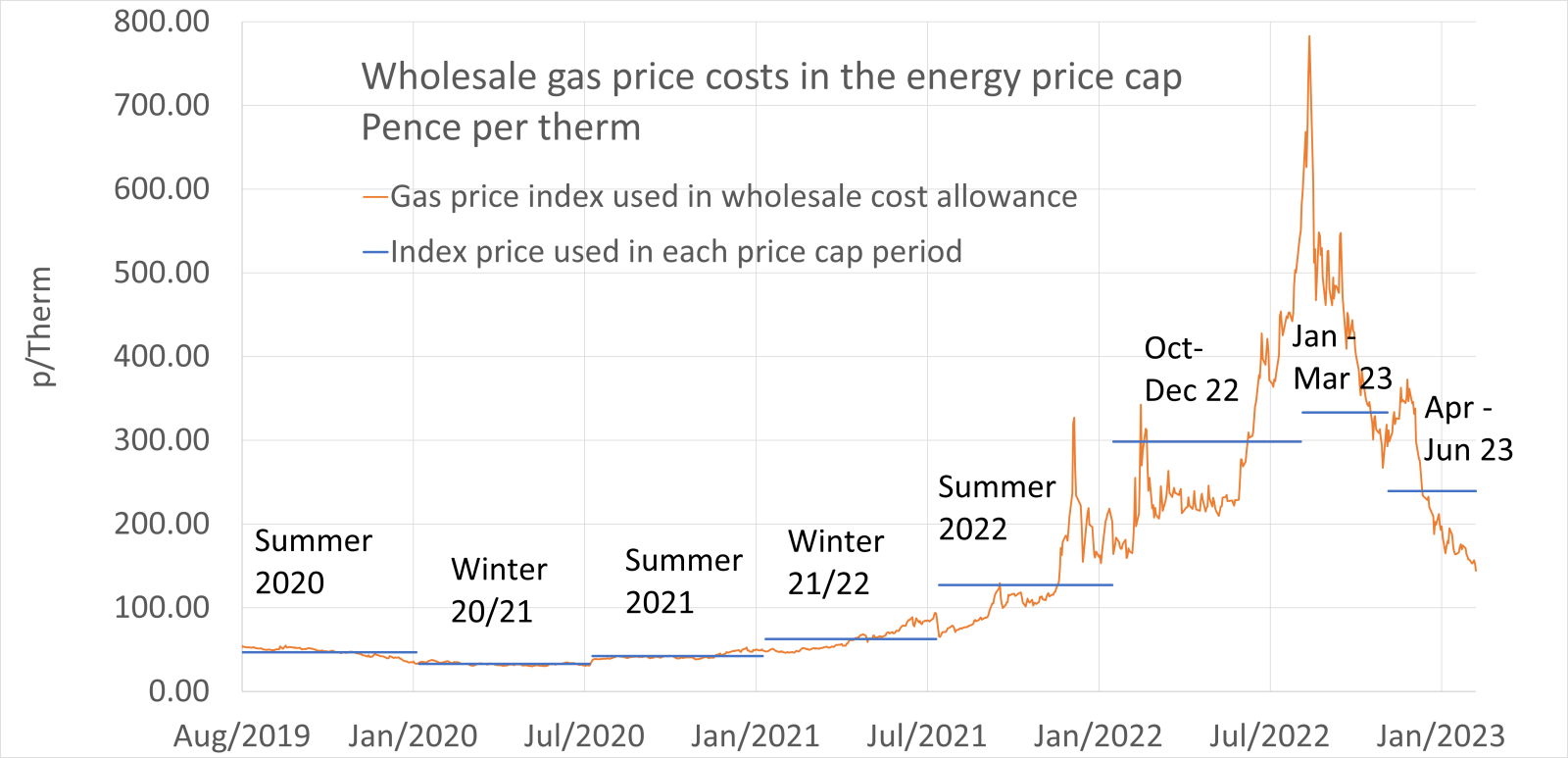
So why is this? How is the cap set?
Ofgem does not directly determine its price cap based on wholesale costs for suppliers, although it does make up the largest of the five key factors considered in the process.
Network, policy and supplier operating costs also add to what consumers are charged, with 5% worth of value added tax then placed on top of this.
Wholesale energy prices make up two-thirds (66%) of the costs on a standard dual energy bill, at £2,170 of the new £3,280 price cap, according to Ofgem.
The current cap accounts for a wholesale charge of £3,177 per household, meaning this part of the bill will only fall 31%, despite gas being 64% cheaper than when the last figure was set on December 1.
interactive investor editor Alice Guy explained: “Unfortunately, lower prices take months to feed through to customers as energy companies buy their energy months in advance.”
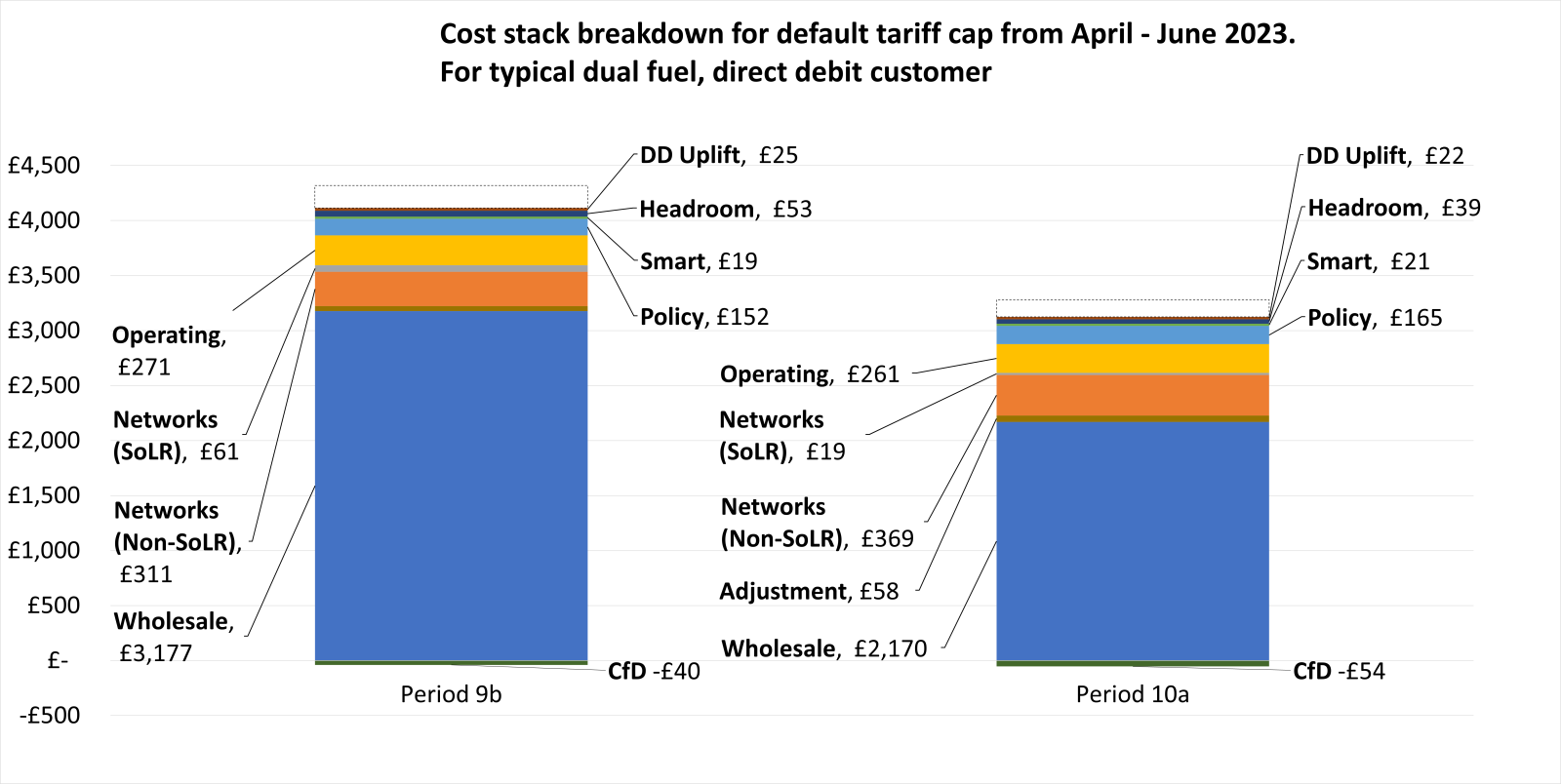
Period 9b (Jan – March 23) to cap period 10a (April - June 2023) - Ofgem
Network Costs
Network costs include prices charged to suppliers by operators, such as National Grid, UK Power Networks and Scottish & Southern, which maintain the power grid.
These added costs are then passed on to consumers by suppliers, such as Centrica-owned British Gas, EDF Energy and E.ON, and are set to make up £369 of the bill, or just over 11%.
Balancing charges are also incorporated under networking costs and, again, are passed on to consumers.
These are incurred by National Grid’s system operating wing (ESO), responsible for ensuring the UK’s entire energy supply, which pays generators to either consume or produce power based on real-time demand.
Balancing costs only make up a small proportion of household bills, according to experts at Resolve Energy, but ESO data shows the amount spent on such activities almost trebled from £500mln in the winter of 2020, to £1.5bn between November 2021 and February 2022.
Ofgem subsequently launched an investigation into the “excessive” benefits generators have been gaining from balancing payments and is poised to up regulation on the market.
Supplier operating costs
Covering customer service, billing and other general costs, this part of Ofgem’s price ultimately ensures energy suppliers can cover operations “as well as make a profit,” the regulator writes.
£261 of a standard £3,280 bill is therefore earmarked for firms’ operating costs.
Largely unchanged from £271 dedicated to firms’ operations now, 7.9% of an average bill will go towards paying these costs from April 1.
Centrica, which owns British Gas, reported a 2022 operating profit of £3.31bn in mid-February, almost triple what it raked in 2021.
SSE, another UK supplier, forecasted adjusted earnings per share to hit 150p for the full year, up nearly two-thirds from 94.5p in 2021.
Policy costs
‘Policy costs’ is an umbrella term for the extra charges energy suppliers place on bills for social and environmental schemes they take part in.
Whether it be towards schemes supporting better efficiency in homes, helping vulnerable people with bills, or incentivising firms to switch to renewable and clean technology, policy costs mark the fourth largest proportion of Ofgem’s bill model.
An average customer will pay £165 in bills to fund such schemes for the year from April 1, at 5% of the total costs.
This is up marginally from the £152 charged in bills currently.
VAT and other costs
According to Ofgem, value added tax has been included in its new price cap, which at 5% will cost consumers £164.
A host of other factors are included in Ofgem’s figure to make up the remaining 6%, such as adjustment costs to protect suppliers from unexpected price changes, and payments towards contract for difference schemes – which see the government subsidise companies investing in renewable energy.
Ofgem is expected to lower its price cap to around £2,153 in July, according to Alice Guy, meaning only then will households finally see bills fall.
Several calls have been made for the government to rethink its position on energy support, given the actual price hikes customers are set to face from April.
“The government must cancel its imminent hike in household energy bills at next month’s budget. Families across Britain are being pushed to the brink by sky-high bills,” said Trade Union Congress boss Paul Nowak.