
Anson Resources Ltd (ASX:ASN) has identified a significant opportunity to further reduce carbon emissions, improve ESG credentials and reduce operating costs at the Paradox Project, following highly positive results from a hydro power energy recovery study at its Paradox Lithium Project in the Paradox Basin in Utah, USA.
The study, which was conducted by the Worley Group outside the scope of the Definitive Feasibility Study, was designed to identify opportunities to:
- utilise the hydraulic power of brine flowing from the wells; and
- utilise the energy generated by brine being transported to the production location, from the top to the bottom of a canyon - 330m (1,000 feet) - to the processing plant.
Importantly, results indicate that up to 7MW of ‘green energy’ may be generated during brine extraction and transportation to lithium extraction plant via the addition of small-scale hydro energy plants.
This can be broken down into:
- up to 4MW of power may be generated from each of the brine recovery wells at surface where pressure is expected to be 1700+psi; and
- up to an additional 3MW of power may be generated at the lithium extraction plant with brine falling vertically 330m from wells with a specific gravity of 1.28.
Explaining the significance of the results, Anson’s CEO, Bruce Richardson said, “Anson has a commitment to identifying opportunities to lower its environmental disturbance and carbon emissions with the use of technology. From the commencement of development of the Paradox Lithium Project, Anson has sought technologies to reach this objective.
“This has included the use of Direct Extraction technology rather than traditional ponds. Harnessing naturally occurring pressure to bring brine to surface rather than pumping using carbon-based fuels and then using pressure at the well-head to generate electricity is another example of how Anson is seeking to reduce emissions.
“Generating hydro power from the vertical fall from the recovery point to the production site is a further example of how the company is seeking to achieve its low carbon intensity targets.
“Anson is committed to building a lithium extraction process that will meet the standards for emissions that will be set in 20 years, not those set 20 years ago. The potential to utilise hydropower provides not only the ability to assist us in reaching this goal but also provides the Company with a cost advantage compared to its competitors.”
With the success of this study and with potential offtake partners and original equipment manufacturer (OEMs) in mind, Anson will conduct further studies to meet its low carbon lithium emissions goals.
Highlights of the study
Previous engineering studies indicated that the pressure of the brine at a depth of approximately 2,000 metres (6,500 feet) was measured and recorded as approximately 4,500psi, and was sufficient to lift the brine to surface without mechanical pumping. It also indicated that the energy was not exhausted at the top of the well, as the pressure was measured at 1,700psi at this point.
Following on from this, the Worley hydro power energy study identified that each of the recovery wells could be connected to a small Pelton Pit Turbine to extract the energy generated by the pressure and create hydro power.
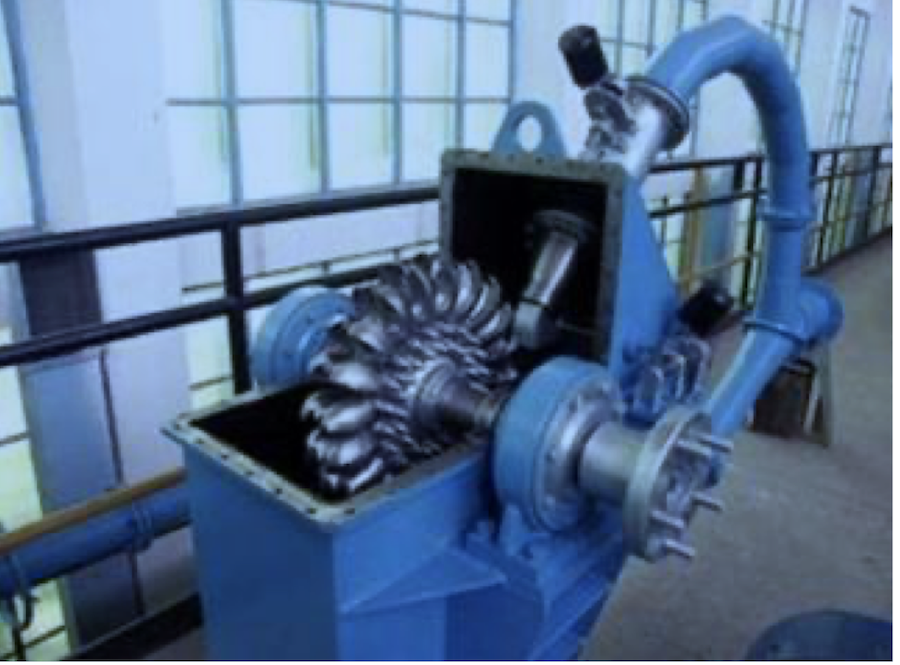
Example of commercially available Small Pit Pelton hydro power unit for location at the recovery site.
Based on the study and available information, up to 4MW of power may be generated using small Pelton Pit Turbines.
In addition, the Worley study identified that power may also be generated as the brine enters the lithium extraction and processing plant. A small powerhouse would need to be constructed to house the turbine and generator to produce up to 3MW of power.
The Front End Engineering Design (FEED) being undertaken will further examine the option to include hydro power generation as part of the Project’s overall power supply strategy.