
It’s hard to believe that a country three-quarters the size of California could make up a trillion-dollar mining opportunity. But that just goes to show the Philippines is full of surprises.
This archipelagic haven in South East Asia is widely regarded as a holidaymaker’s dream — warm, tropical weather, scenic beaches and a big hospitality culture makes it easy to see the appeal.
But what you might not know is that beyond the tourist traps and beneath the fertile soils are vast quantities of the world’s most precious minerals.
When you put a ruler to the country’s key deposits, the Philippines ranks third for gold, fourth for copper, fifth for nickel and sixth for chromatite. Impressive for a nation that spans just 300,000 square kilometres.
But if the Philippines is such a rich resource opportunity, why is no one talking about it? And as global demand for precious and base metals continues to grow, what role will the country play in tomorrow’s mining industry?
In this article:
- The gold rush: why international miners flocked to the Philippines
- Pump the brakes: understanding two decades of regulation
- A new era: economic mining with an ESG focus
- Ahead of the pack: Celsius Resources
- Emerging opportunity: what miners need to know
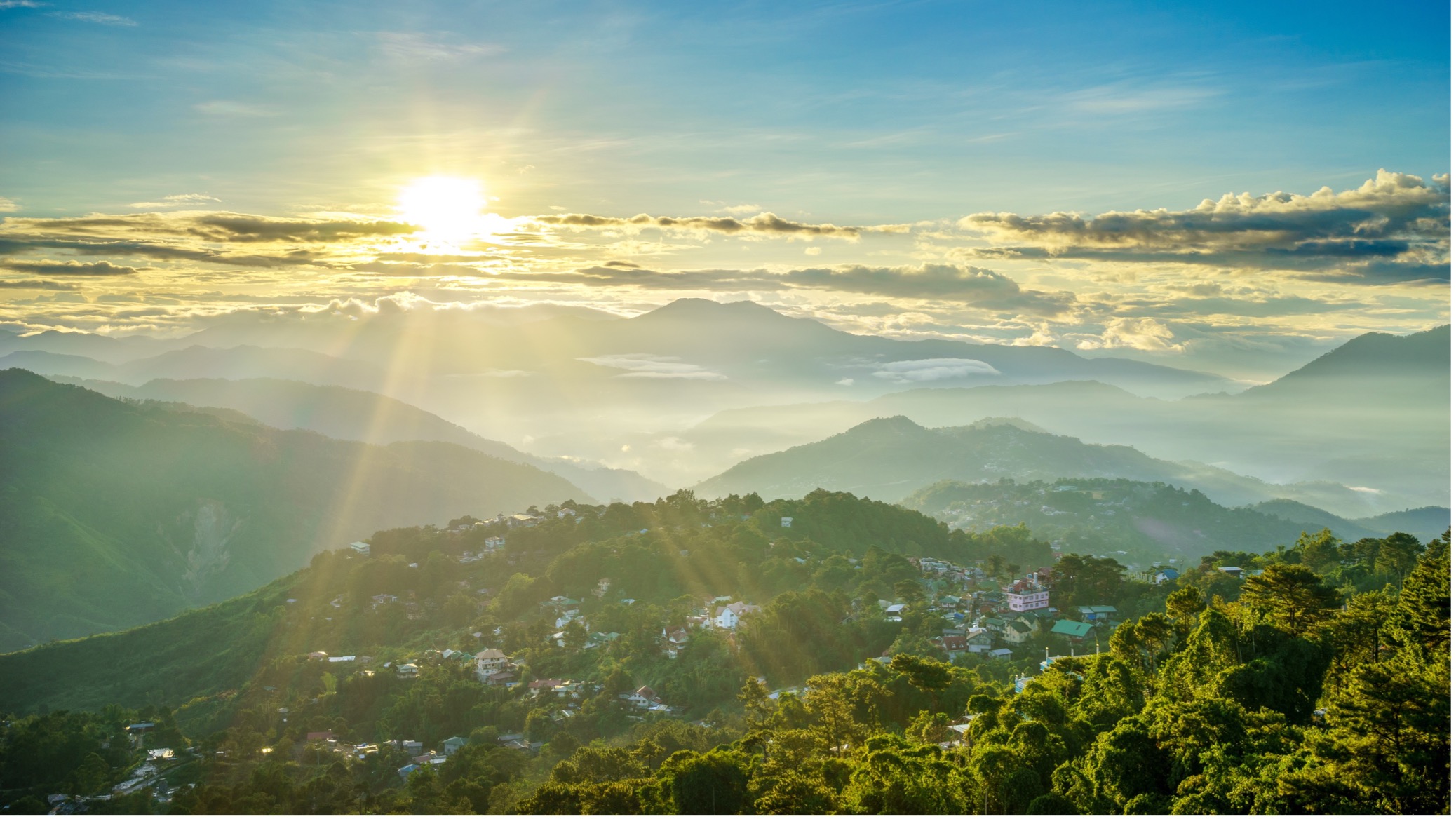
Sunrise at Mines View Park in the Philippines.
The gold rush: why international miners flocked to the Philippines
To fully comprehend the Philippines' trillion-dollar resource potential, we need to wind back the clock to when the promise of a gold rush first lured mining hopefuls to the shore.
A sudden uptick in international interest gave rise to the Philippines’ first mining act, which stipulated that any mining companies operating in the region should be 60% owned by Filipino citizens — a move to protect their economic interests amid growing curiosity.
However, it wasn’t until after World War II that gold mining entered its heyday. New legislation began to welcome foreign investment, while gold miners enjoyed further financial protection under President Ferdinand Marcos.
Following the Philippines’ first modern mining law (enacted in 1974), and an executive order that made it easier to welcome external mining companies (1989), international miners flocked to the island nation.
It’s easy to measure the policy’s influence based on what was pulled from the ground: on average, between 1988 and 1994, just under 4 million tonnes of gold ore was extracted from the Philippines every year.
This led to the mining act of 1995: legislation which purported to share the spoils of mining with local governments and protect sacred indigenous land.
However, the law also paved the way for 100% foreign ownership, ushering in an era of environmental upheaval that necessitated major reform.
Pump the brakes: understanding two decades of regulation
The Cordillera Peoples Alliance says the economic growth, rural progress and development promised in the 1995 act remained far from a reality.
“More than economic growth, the Mining Act paved way for the massive plunder and destruction of natural resources, displacement of communities, and violations of the collective rights of indigenous peoples,” the alliance explained.
Just one year after the 1995 act came the Marcopper mining disaster — an incident widely regarded as the worst mining and environmental incident in the history of the Philippines.
A drainage tunnel collapse leaked toxic tailings waste into the Makulapnit-Boac river, triggering flash flooding that displaced hundreds of families and buried entire villages.
The tragedy is widely regarded as the linchpin for a wave of mining reforms: the Indigenous Peoples Rights act saw foreign investment soften and in 2012, when 25 small-scale miners were killed in a landslide, the Philippines took any new mining agreements off the table.
What followed the moratorium on mining agreements was an even more intense auditing period.
The Department of Environment and Natural Resources (DENR) closed or suspended 28 mines and in 2017, legislation guaranteed that new open-pit precious and base metal mines wouldn’t secure a mining licence.
Many argue this period of regulation and reform — a concentrated effort to protect the environment and re-establish government authority — provided vital breathing space to align the industry with ESG practices. But where do things stand now?
A new era: economic mining with an ESG focus
In the aftermath of COVID, the Philippines is opening the door to foreign mining again. This time, however, opportunity only knocks for entities dedicated to operating in an environmentally sustainable and socially-conscious manner.
In April 2021, President Rodrigo Duterte walked back the 2012 mining agreement moratorium, and just eight months later, the open-pit mining ban went too.
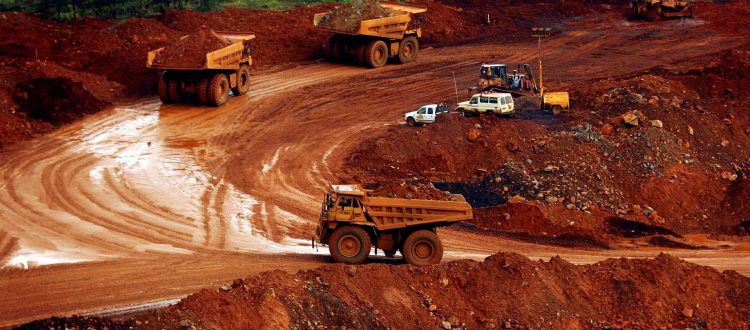
Nickel mining in the Philippines. Source: Mines and Geosciences Bureau.
As the prohibition ends, the DENR’s Mines and Geosciences Bureau (MGB) is preparing for an influx of mining projects, noting up to 190 new mines could come online between now and 2026 — nearly half of which have open-pit potential.
Finance secretary Benjamin Diokno sees the local mining industry as one of the sectors with “[the] greatest potential to be a key driver in the country’s recovery and long-term growth”.
It’s important to note that the industry’s revitalisation goes hand-in-hand with an ESG focus. The MGB has launched a plethora of social and environmental protection and rehabilitation programs, focused on initiatives like:
- social development and management;
- environmental protection and enhancement;
- planting mining forests; and
- final mine rehabilitation and decommissioning.
By mid-last year, mining companies had committed more than 420 billion Philippine pesos to support these programs, while upwards of 47 million trees have been planted.

Arbor day 2022. Source: Mines and Geosciences Bureau.
Grounded by the focus on ESG initiatives, stringent audit processes remain in play — necessary to ensure miners stick to the rulebook. The message is simple: the Philippines can be a new frontier for mining, but environmental, social and governance strategies must build a strong foundation.
With that understanding in mind, there’s renewed focus on rebuilding the Philippines as a robust mining economy. And one of the companies that sees the potential is a storied ASX-lister.
Ahead of the pack: Celsius Resources
Celsius Resources Ltd (ASX:CLA, AIM:CLA) is chasing copper and gold opportunities across a global portfolio of precious and base metal assets.
Its main focus, however, is the Maalinao-Caigutan-Biyog (MCB) asset — a copper-gold hub just 320 kilometres from the Philippine capital, Manila.
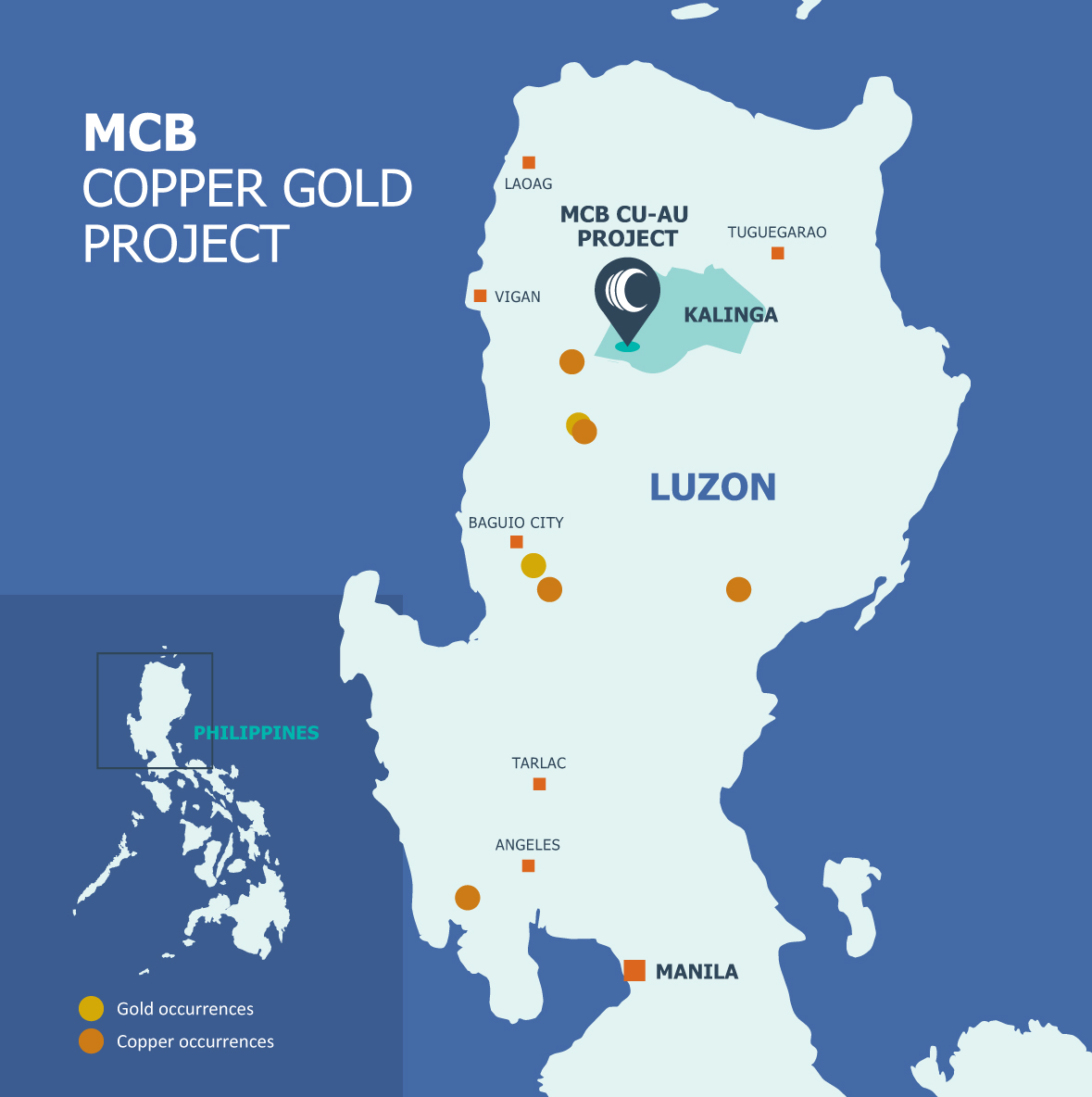
Map of the MCT Project. Source: Celsius Resources.
MCB’s prospectivity is well recorded: back in its heyday, Freeport McMoRan (the world’s third-largest copper producer) conducted extensive drilling and exploration, highlighting its world-class potential.
Celsius has since taken on project ownership, putting in the hard yards over COVID to eke out a development pathway. There’s still a way to go, but the company hopes to bring the project online in 2025.
The explorer’s copper-gold position is further galvanised by two more Philippine assets: The Sagay Project, currently under exploration, and the Malangsa Prospect, which is in the pipeline.
Looking at the bigger picture, Celsius executive director Peter Hume says quality assets and people are what distinguishes the company from its peer group.
“The company is driving forward with a very strong ESG focus, championing environment, people and communities,” he explained. “We have a very strong background on that.”
The hard work is paying off: in late 2022, the Balatoc Indigenous Cultural Community formally expressed its consent to the MCB Project, while the MGB greenlit its social development and management and care and maintenance programs.
These social approvals are important steps forward on the development journey — they’re needed to greenlight a Declaration of Mining Project Feasibility and, consequently, a Mineral Production and Sharing Agreement (MPSA).
This process is streamlined thanks to Celsius’ in-country experience. Peter himself has worked in the Philippines for 15 years — tenure that makes him familiar with the evolving regulatory landscape and the local communities that mining stands to impact.
He believes this space holds great potential for precious and base metal miners, particularly those that understand and respect the regulations.
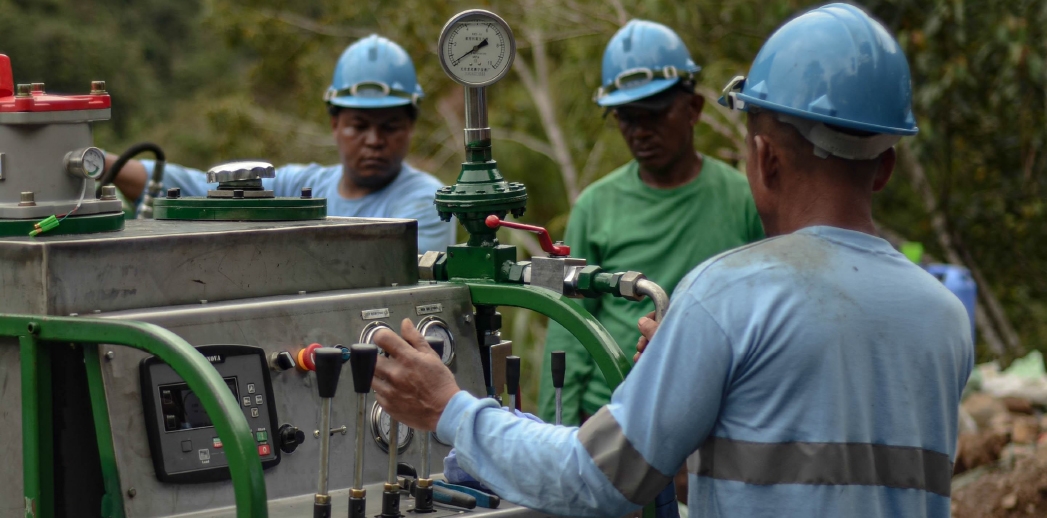
The Celsius team hard at work. Source: Celsius Resources.
Emerging opportunity: what miners need to know
As the Philippines welcomes more foreign investment, Peter says it’s important to recognise the different cultures, traditions and systems that inform the Philippine mining community.
“If you're going to fit into a country, you have to understand their requirements. You have to sit with them, you have to take time to understand [the country].”
Conversely, Peter says companies that don’t take the time to build relationships risk harming their projects — and the broader industry.
“It sounds blunt, but if you can't match with the communities, if you can't sit with the national government and understand their requirements — don't come.
“The last thing the mining industry wants is companies coming in from overseas and trying to make it work their way.”
By that same token, companies that respect the environmental regulations — and understand the local communities — will find themselves at the forefront of an exciting new frontier.
“Communities and the environment are very important,” he explained.
“When I say spend time with communities, you've actually got to go and live with them. You've got to eat with them. You've got to attend their wakes and their weddings. You've got to have real dedication and commitment to making that work.
“An ore body is only an ore body. If you don't have the support of the community and the local governments, it'll stay underground forever.”