
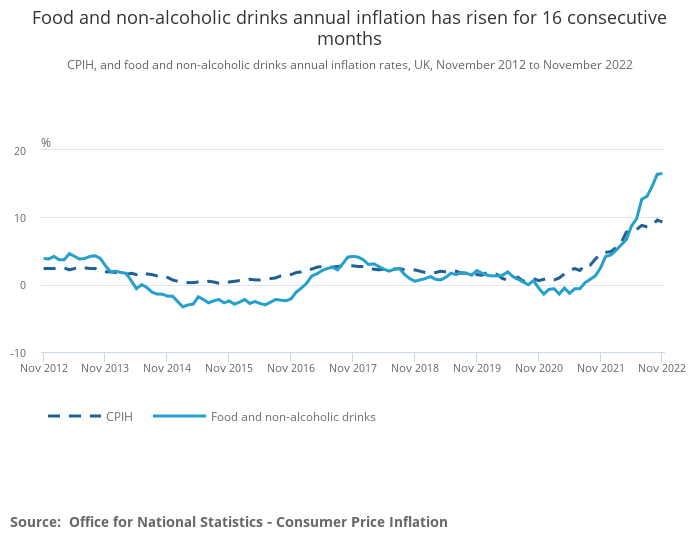
Overall inflation including housing costs fell from October to November 2022, but the cost of food and non-alcoholic drinks has continued to rise, according to data from the Office for National Statistics (ONS).
The headline inflation figure fell to 9.3% in November from 9.6% in October but food and non-alcoholic drink inflation rose by 16.5% in the 12 months to November 2022, the highest increase since September 1977 (17.6%).
Staple foods, such as breads and cereals, have seen the largest price increases in the last month, increasing by 1.9%, with the most vulnerable appearing to be the hardest hit, with 61% of those in the most deprived areas buying less food compared with last year, as opposed to 44% in the least deprived areas.
The inflation gap between low-income and high-income households is the largest it has been since March 2009 with annual inflation for low-income households 10.5% in the year to October 2022, while the figure for high-income households was 9.1%.
With Christmas just days away, over four in five adults (81%) reported to the Food Standards Agency (FSA) that they were concerned about the cost of food during Christmas and New Year – up from 62% in the same period last year.