
A traditional 'Santa rally' in the stock market could be on this year following the recent upturn in investor sentiment, with analysts highlighting "bargains aplenty" among London-listed shares.
With less than three weeks before the festive break, the internationally focused FTSE 100 wiped out its losses for the year but the domestic mid-caps of the FTSE 250 are still sitting 19% below where they started the year.
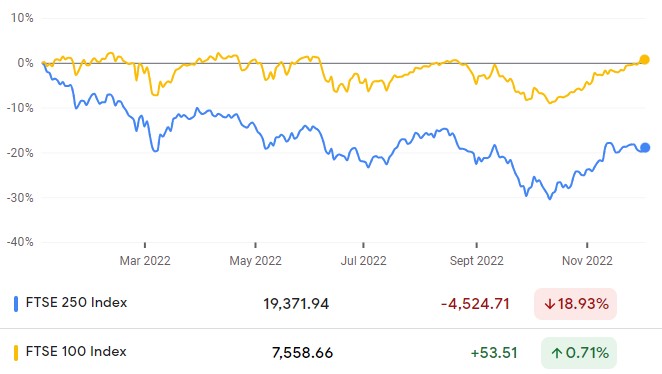
The Footsie is up over 10% since scraping a near 18-month low in mid-October, while looking across the Atlantic the S&P 500 is up 13% and the Dow Jones up 19%, while the Nasdaq Composite is up just over 10%.
Looking at the UK, there has been more stability, "or at least less volatility", since chancellor Jeremy Hunt's autumn statement in November and most company results have been roughly in line with expectations, said broker Shore Capital, suggesting the recovery "offers the possibility of a welcome Santa rally".
Santa stats
The idea of Santa rallies was conceived in 1972 by analyst Yale Hirsch, who noticed that markets tended to pick up in the last week or two of December, though the historical performance of stock markets in December as a whole has some pretty positive stats behind it.
December's average monthly return for the FTSE 100 index is around 2% over more almost three decades, which tops average returns in almost all months.
Going back all the way to 1986, online broker IG found that the biggest rises in both the FTSE 100 and the S&P 500 of New York stocks typically occurs from 16, 15 and 14 December.
Dow Jones data shows the US blue chip index, S&P 500 and Russell 2000 small caps indexes have ended higher in December more often than any other month, with the Russell 2000 gaining ground in December 83% of the time since 1987 and with an average return of 2.8% - the best for any month.
The S&P 500 has also risen 73% of all Decembers over the past 90-plus years, while the Dow has risen in December for seven out of 10 times over more than 120 years.
The record of the Nasdaq tech-stocked index is less good, the Wall Street Journal noted, with the index up just over six out of ten times over the past five decades.